
-
-34%

IR2110 Mosfet & IGBT Gate Driver IC
Original price was: ₨450.00.₨299.00Current price is: ₨299.00. Quick ViewThe IR2110 is high voltage, high speed power MOSFET and IGBT drivers with independent high and low side referenced output channels.
-
-38%

MOSFET (metal-oxide-semiconductor field-effect transistor, pronounced MAWS-feet) is a special type of field-effect transistor (FET) that works by electronically varying the width of a channel along which charge carriers (electrons or holes) flow. The wider the channel, the better the device conducts. The charge carriers enter the channel at the source and exit via the drain. The width of the channel is controlled by the voltage on an electrode called the gate, which is located physically between the source and the drain and is insulated from the channel by an extremely thin layer of metal oxide.
-
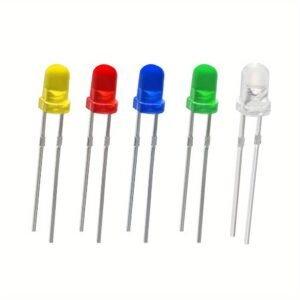
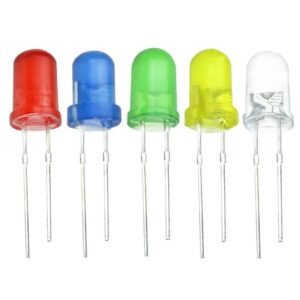
- Type: 5mm Diffuse Led
- Colors: Red, Green, Yellow, Blue and Ultra-bright White
- Pot diameter: 5mm
- Shell Material: Epoxy
- Typical working voltage: 1.9 to 2 volts
- Typical current: 20mA
- Wavelength: 620 to 625nm
- Luminous intensity: 600 to 800mcd
- The angle of view: 45
- Number of pins: 2
-
-50%


HI-LINK 120VAC-220VAC 5VDC 3W Power Supply
Original price was: ₨1,500.00.₨749.00Current price is: ₨749.00. Quick View- Input voltage:90-240 VAC
- Low ripple and low noise
- Output overload and short circuit protection
- High efficiency, high power density
- Low power consumption, environmental protection, no-load loss <0.1W
- 100% load aging and testing
- Operation Temperature: -20 — +60
- Store Temperature: -40 — +80
- Relative humidity: 5 — 95 %
- Cooling way by radiation
- Atmospheric pressure: 80—106 Kpa
- Sea level elevation: 2000 m
- Rated input voltage: 100-240 VAC
- Input voltage range: 90-264 VAC
- Meets UL and CE requirements
- Ultra-thin and ultra-small
-
-53%

SG3525 / KA3525 PWM Controller IC in Pakistan
Original price was: ₨190.00.₨89.00Current price is: ₨89.00. Quick View- DUAL SOURCE/SINK OUTPUT DRIVERS
- LATCHING PWM TO PREVENT MULTIPLE PULSES
- PULSE-BY-PULSE SHUTDOWN
- INTERNAL SOFT-START
- 8 TO 35 V OPERATION
- 100 Hz TO 500 KHz OSCILLATOR RANGE
- 5.1 V REFERENCE TRIMMED TO 1 %
- ADJUSTABLE DEADTIME CONTROL
- INPUT UNDERVOLTAGE LOCKOUT WITH HYSTERESIS
- SEPARATE OSCILLATOR SYNC TERMINAL
-
-40%
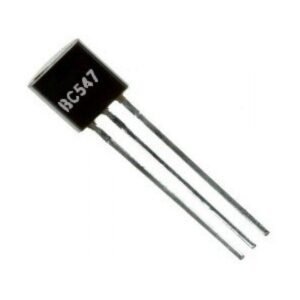

BC547-B166 NPN Transistor 50V/ 0.3A
Original price was: ₨15.00.₨9.00Current price is: ₨9.00. Quick ViewOverall, the BC547 NPN transistor is a versatile and reliable transistor that is suitable for a wide range of applications. NPN Transistor BC547 is a popular choice for electronic hobbyists and engineers because it is inexpensive and easy to use. here are the specifications of the BC547-B166 NPN transistor:
- Collector current (maximum): 300mA
- Collector-emitter voltage (maximum): 65V
- Base current (maximum): 5mA
- Current gain (hFE): 110 to 800
- Package: TO-92
-
-27%
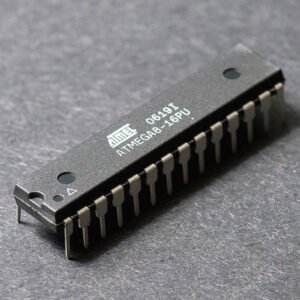
Atmega8 Microcontrollers IC 8Kbytes
Original price was: ₨899.00.₨659.00Current price is: ₨659.00. Quick ViewThe Atmel AVR ATmega8 is a low-power CMOS 8-bit microcontroller based on the AVR RISC architecture. By executing powerful instructions in a single clock cycle, the ATmega8 achieves throughputs approaching 1MIPS per MHz, allowing the system designer to optimize power consumption versus processing speed.
-
-30%
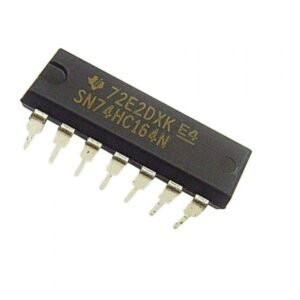
74HC164 8-Bit Parallel-Out Shift Register
Original price was: ₨100.00.₨70.00Current price is: ₨70.00. Quick ViewFeatures/Specs:
Wide Supply Voltage Range from 2.0V to 6.0V
Sinks or Sources 4mA at VCC = 4.5V
CMOS Low Power Consumption
Schmitt Trigger Action at all Inputs
ESD Protection Exceeds JESD 22v 200-V Machine Model (A115)
2000-V Human Body Model (A114)
Exceeds 1000-V Charged Device Model (C101)
Range of Package Options SO-14 and TSSOP-14
Totally Lead-Free & Fully RoHS Compliant
Halogen and Antimony Free. Green Device
-
-22%
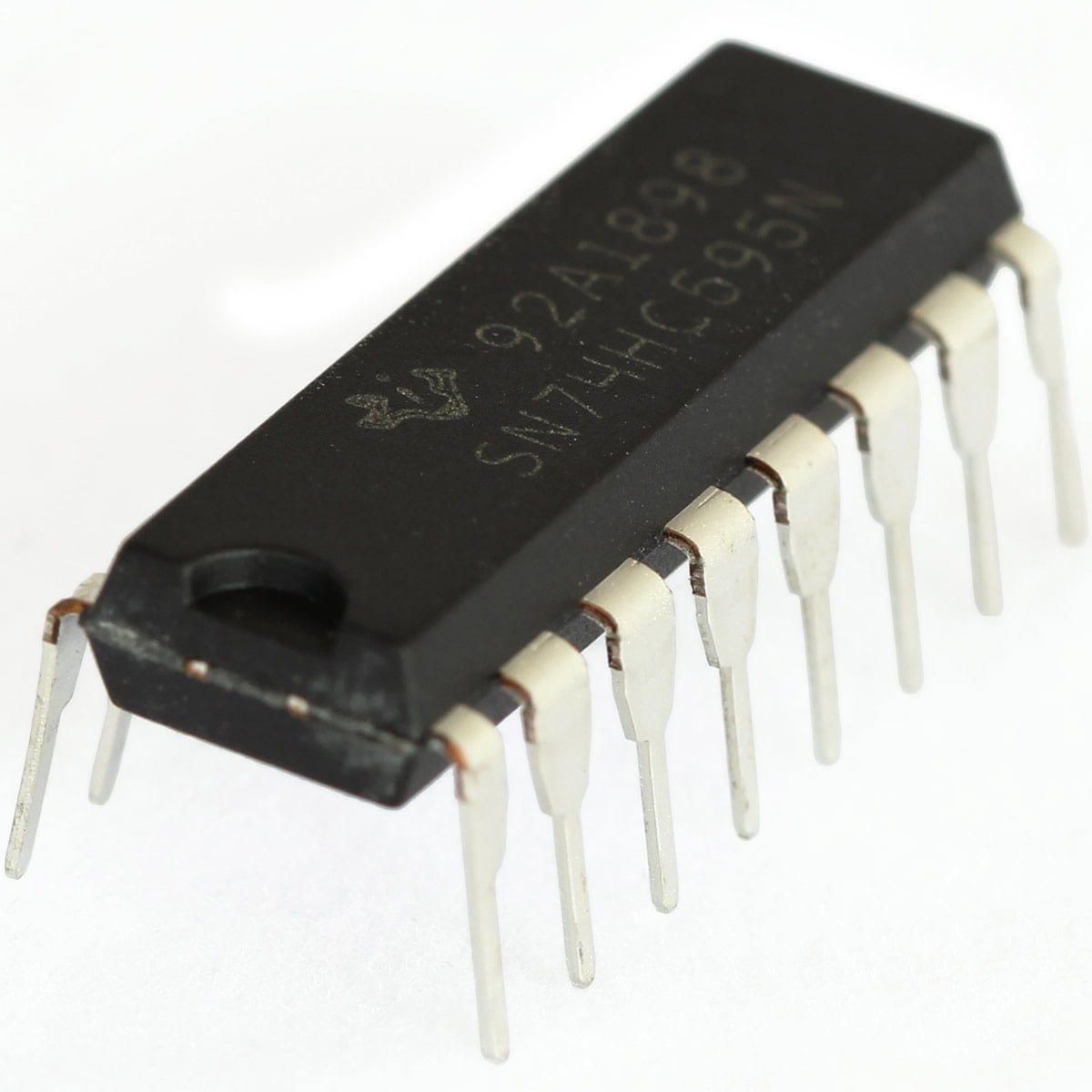
74HC595 74HC595D Shift Register
Original price was: ₨90.00.₨70.00Current price is: ₨70.00. Quick View74HC595 8-BIT SERIAL-IN SERIAL OR PARALLEL-OUT SHIFT REGISTER contain an 8-bit serial-in, parallel-out shift register that feeds an 8-bit D-type storage register. The storage register has parallel 3-state outputs. Separate clocks are provided for both the shift and storage register. The shift register has a direct overriding clear (SRCLR) input, serial (SER) input, and serial outputs for cascading. When the output-enable (OE) input is high, the outputs are in the high-impedance state.
-
-33%

D-Type Flip-Flop 74HC175 DIP16 – SN74HC175N
Original price was: ₨60.00.₨40.00Current price is: ₨40.00. Quick View- Outputs can drive up to 10 LSTTL loads
- Contain four flip-flops with double-rail outputs
- 80A Maximum low power consumption
- 13ns Typical tpd
- 4mA Output drive at 5V
- 1A Maximum low input current
-
-33%
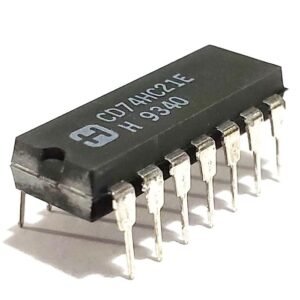
CD74HC21E 74HC21 Dual 4-Input Positive-AND Gates IC
Original price was: ₨60.00.₨40.00Current price is: ₨40.00. Quick View- Wide Operating Voltage Range of 2 V to 6 V
- Outputs Can Drive Up To 10 LSTTL Loads
- Low Power Consumption, 20-?A Max ICC
- Typical tpd= 11 ns
- ?4-mA Output Drive at 5 V
- Low Input Current of 1 ?A Max
-
-8%
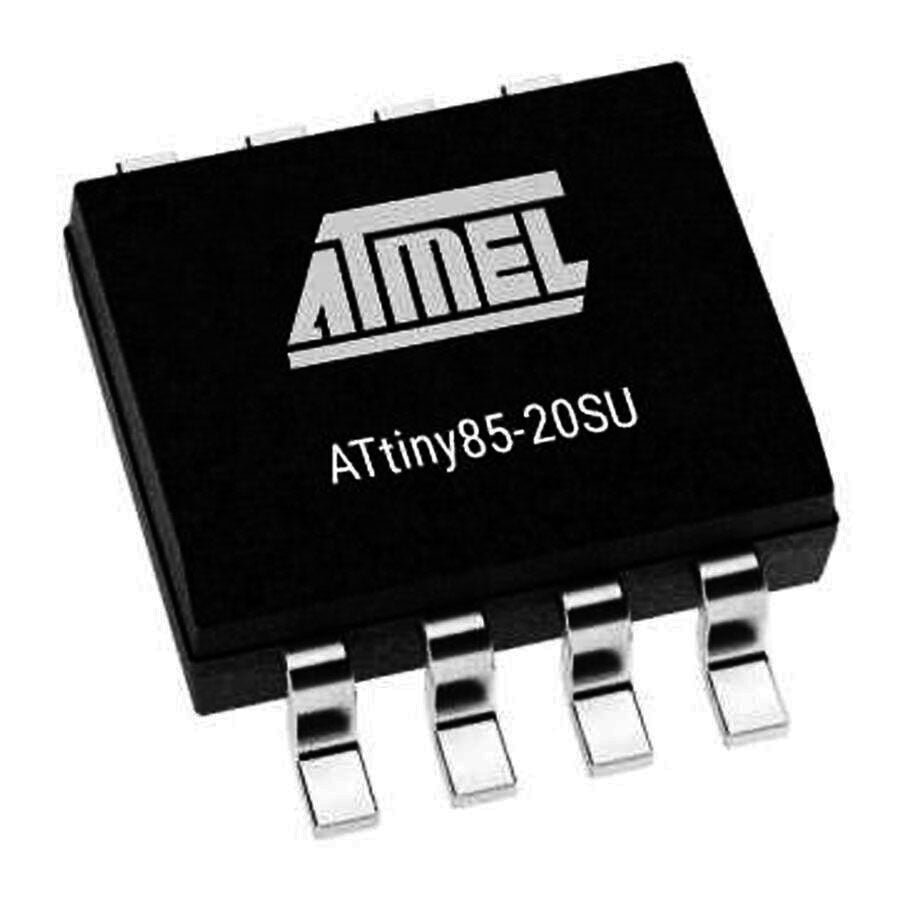
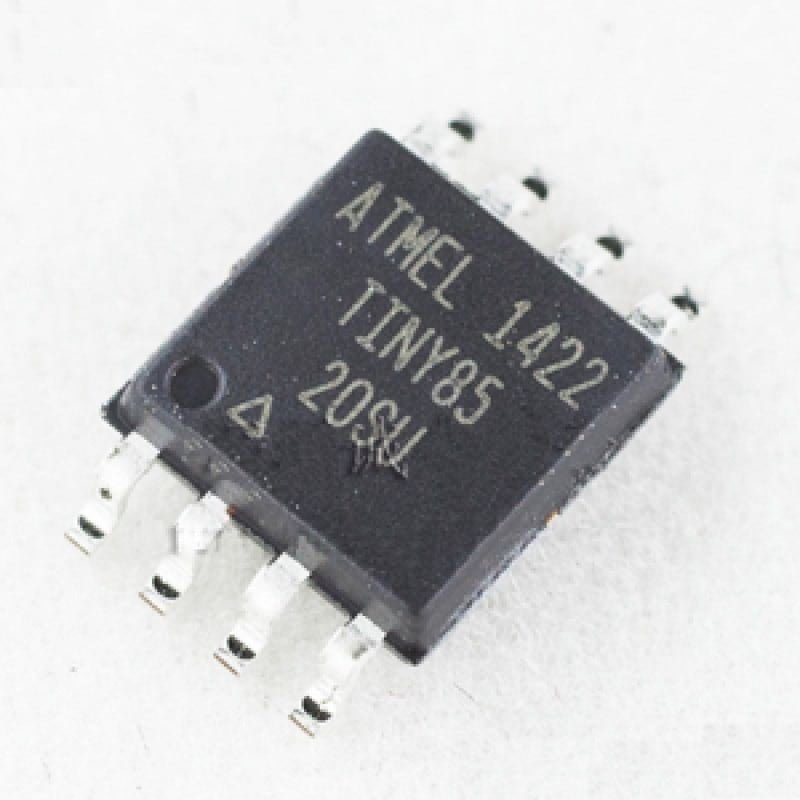
Atmel Attiny85 Attiny-85 ATtiny85-20PU
Original price was: ₨1,200.00.₨1,099.00Current price is: ₨1,099.00. Quick ViewFeatures of ATtiny85 Microcontroller:-
- Flash (Kbytes): 8 Kbytes
- Pin Count: 8
- Max. Operating Freq. (MHz): 20 MHz
- CPU: 8-bit AVR
- Number of Touch Channels: 3
- Hardware QTouch Acquisition: No
- Max I/O Pins: 6
- Ext Interrupts: 6
- USB Interface:No
- Package – SMD
-
-15%
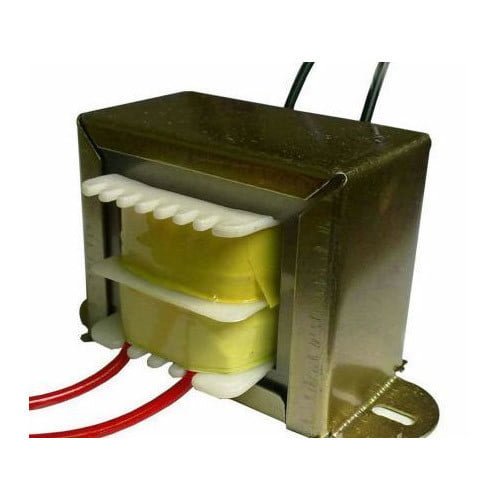
Good Quality Transformer, power supplies for all kinds of project and circuit boards available at electronation.pk in best price
-
-23%
Good Quality Transformer, power supplies for all kinds of project and circuit boards.
-
-20%
 Out Of Stock
K2045 Mosfet 2SK2045 TO-220F FET K2045 NPN
Original price was: ₨50.00.₨40.00Current price is: ₨40.00. Quick ViewLow ON resistance. Ultrahigh-speed switching. High-speed diode built in.
-
-20%
 Out Of Stock
 -
-13%

KBL406 5-600V 4A Bridge Rectifier
Original price was: ₨45.00.₨39.00Current price is: ₨39.00. Quick ViewBridge rectifier diode with a 4A current rating.
-
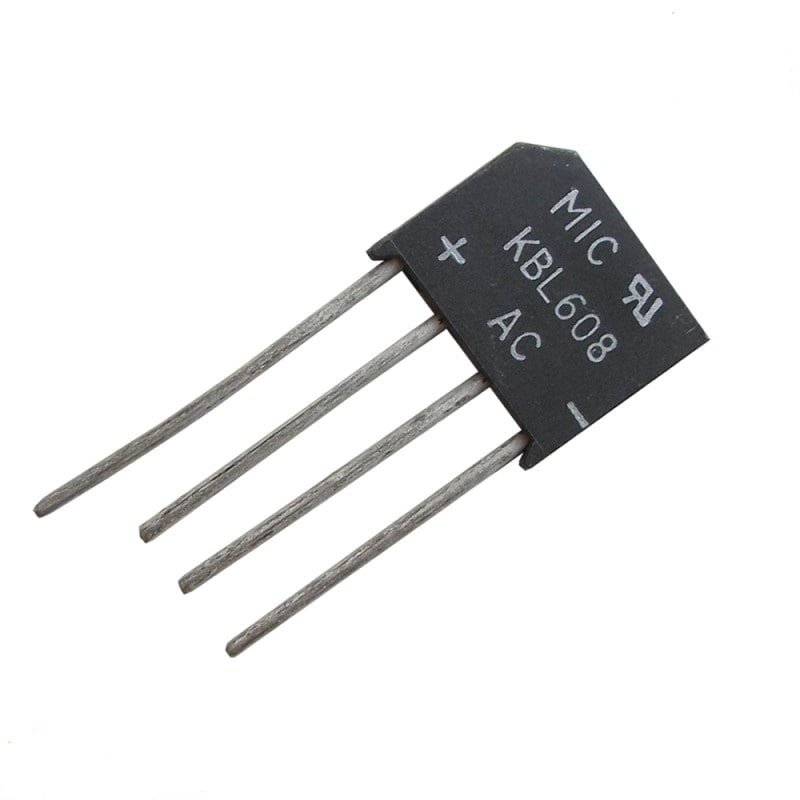
Bridge rectifier diode with a 6A current rating.
-
-11%

KBPC3502 Bridge Rectifier Diode 35A 200V
Original price was: ₨200.00.₨179.00Current price is: ₨179.00. Quick ViewBridge rectifier diode with a 35A current rating.
-
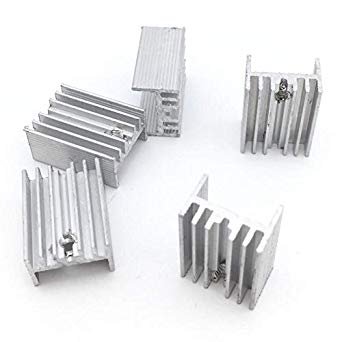
A heat-sink is designed to remove heat from a transistor and dissipate it into the surrounding air as efficiently as possible. Heat-sinks take many different forms, such as finned aluminium or copper sheets or blocks, often painted or anodised matt black to help dissipate heat more quickly. Good physical contact between the transistor and heat-sink is essential, and a heat transmitting grease (heat-sink compound) is smeared on the contact area before clamping the transistor to the heat-sink.
-
-19%
 Out Of Stock
DF005S Diode Bridge Rectifier 1.5A SOP-4 SMD
Original price was: ₨27.00.₨22.00Current price is: ₨22.00. Quick ViewBridge Rectifiers for PCB Surface Mount.
-

The CD4040 is a 12-stage ripple carry binary counter. The counters are advanced one count on the negative transition of each clock pulse. The counters are reset to the zero state by a logical 1 at the reset input independent of the clock.
-

The 4072 is a member of the 4000 Series CMOS range, and contains two independent OR gates, each with four inputs.
-
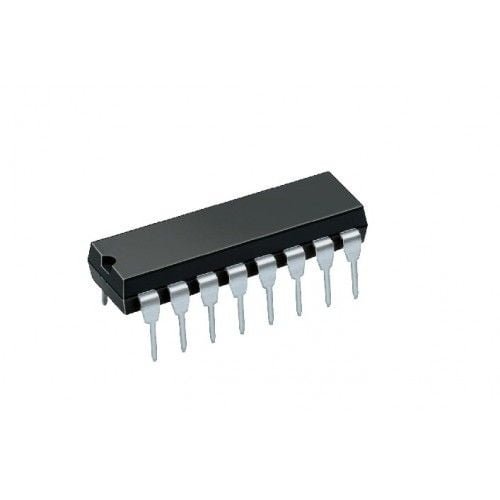
This is a monostable multivibrator or pulse generator.
-

74HC540 is a 20 Pin Octal 3-state Inverting Buffer IC having 2V to 6V Operating Voltage range with 6mA output current. The 3-STATE buffers utilize advanced silicon-gate CMOS technology. They possess high drive current outputs which enable high speed operation even when driving large bus capacitances.
-
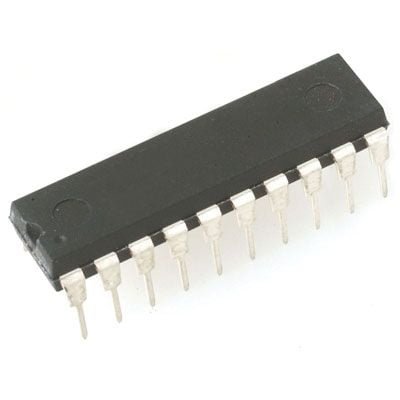
The 74LS373 consists of eight latches with 3-state outputs for bus organized system applications. The flip-flops appear transparent to the data.
-

The 7408 is a QUAD 2-Input AND gates and contains four independent gates each of which performs the logic AND function. It comes in 14-pin DIP package. 7408 AND Gate IC 74HC244 74244 Octal Buffers & Line Driver IC in Pakistan
-

The SN74HC244N is an Octal Buffer and Line Driver IC, designed specifically to improve both the performance and density of 3-state memory address drivers, clock drivers and bus-oriented receivers and transmitters. This device organized as two 4-bit buffers/drivers with separate output-enable (OE)/inputs. When OE/ is low, the device passes non-inverted data from the A inputs to the Y outputs. When OE/ is high, the outputs are in the high-impedance state.
-
Texas Instruments SN7414 Series Inverters are available at ElectroNation.
-
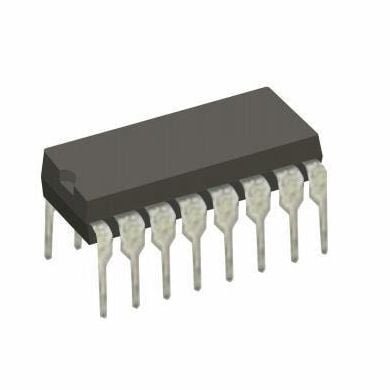
The 74LS139 is a high speed Dual 1-of-4 Decoder/De-multiplexer. The device has two independent decoders, each accepting two inputs and providing four mutually exclusive active LOW Outputs. Each decoder has an active LOW Enable input which can be used as a data input for a 4-output demultiplexer. Each half of the LS139 can be used as a function generator providing all four minterms of two variables. The LS139 is fabricated with the Schottky barrier diode process for high speed and is completely compatible with all Motorola TTL families.
-
-20%
 Out Of Stock
Multiturn Variable Potentiometer 5K
Original price was: ₨495.00.₨396.00Current price is: ₨396.00. Quick ViewA potentiometer is a manually adjustable variable resistor with 3 terminals. Two terminals are connected to both ends of a resistive element, and the third terminal connects to a sliding contact, called a wiper, moving over the resistive element. The position of the wiper determines the output voltage of the potentiometer.
-
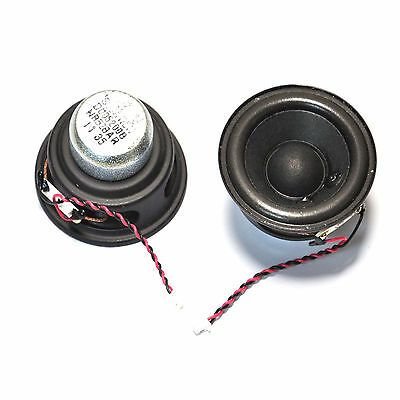 Out Of Stock
This tiny speaker is the perfect addition to any small audio project where you need an8impedance.
-
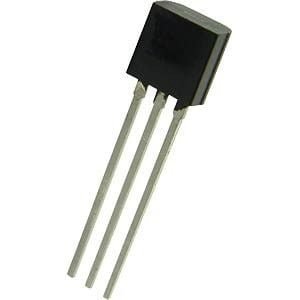
This NPN Bipolar Darlington Transistor is designed for use in switching applications, such as print hammer, relay, solenoid and lamp drivers.
-
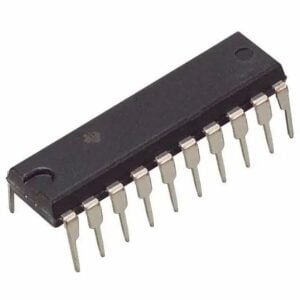 Out Of Stock
This IC is a 16-Bit SPI I/O Expander with Serial Interface. This IC has 25mA sink/source capability per I/O.
-
-16%

Center Tapped Transformer 220V/15V-0-15V 600MA
Original price was: ₨450.00.₨379.00Current price is: ₨379.00. Quick ViewGood Quality Transformer, power supplies for all kinds of project and circuit boards. Step down 220V AC to 15V with a maximum 600MA current. Generally known as a Center tapped transformer.
-
-15%
Center Tapped Transformer 220V/15V-0-15V 400MA
Original price was: ₨350.00.₨299.00Current price is: ₨299.00. Quick ViewGood Quality Transformer, power supplies for all kinds of project and circuit boards. Step down 220V AC to 15V with a maximum 400MA current. Generally known as a Center tapped transformer.
-

This thyristor is intented for use in applications requiring good bidirectional blocking voltage capability, high surge current capability and high thermal cycling performance.
-

BC327 is a PNP bipolar junction transistor which is mainly designed for general purpose, small signal and switching applications.
-

This Power MOSFET provides the circuit designer with the best combination of fast switching, ruggedized device design, low on-resistance and cost-effectiveness.
-

N-Channel Power MOSFET provide the circuit designer with the best combination of fast switching, ruggedized device design, low on-resistance and cost-effectiveness.
-
-45%
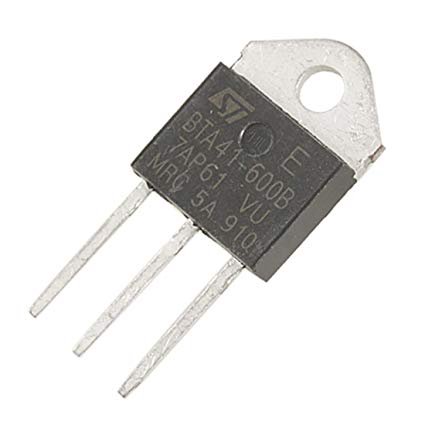
The?BTA41 is a 3-pin Standard Insulated?TRIAC?for general purpose AC switching and can be used as ON/OFF function.
-
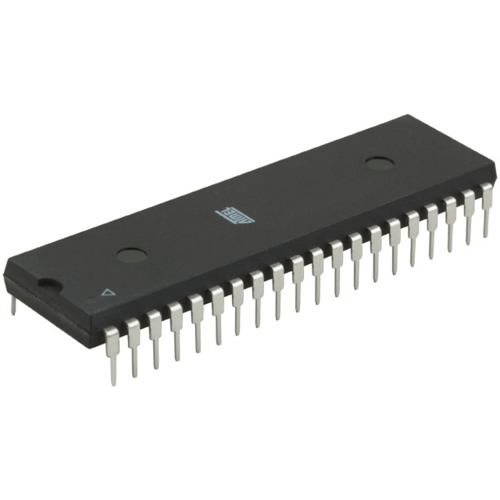
8051 is an 8-bit family of microcontrollers developed by Intel. This microcontroller was also referred as a system on a chip because it has 128 bytes of RAM, 4K bytes of ROM, 2 Timers, 1 Serial port, and four ports on a single chip. The CPU can work for only 8 bits of data at a time because 8051 is an 8-bit processor. In case the data is larger than 8 bits then it has to be broken into parts so that the CPU can process conveniently.
-
-13%
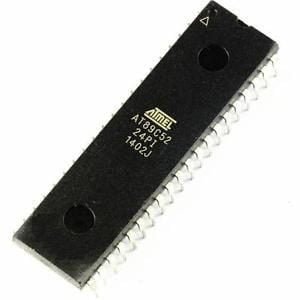
The AT89C52 is a lowe power, high performance CMOS 8-bit microcontroller with 8K bytes of Flash programmable and reaseable read only memory (PEROM). The on-chip flash allows the program memory to be reprogrammed in-syetem.
-
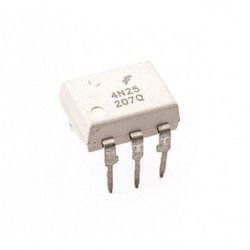
The 4N25 is an optocoupler for general purpose applications. It contains a light emitting diode optically coupled to a photo-transistor.
-
-12%
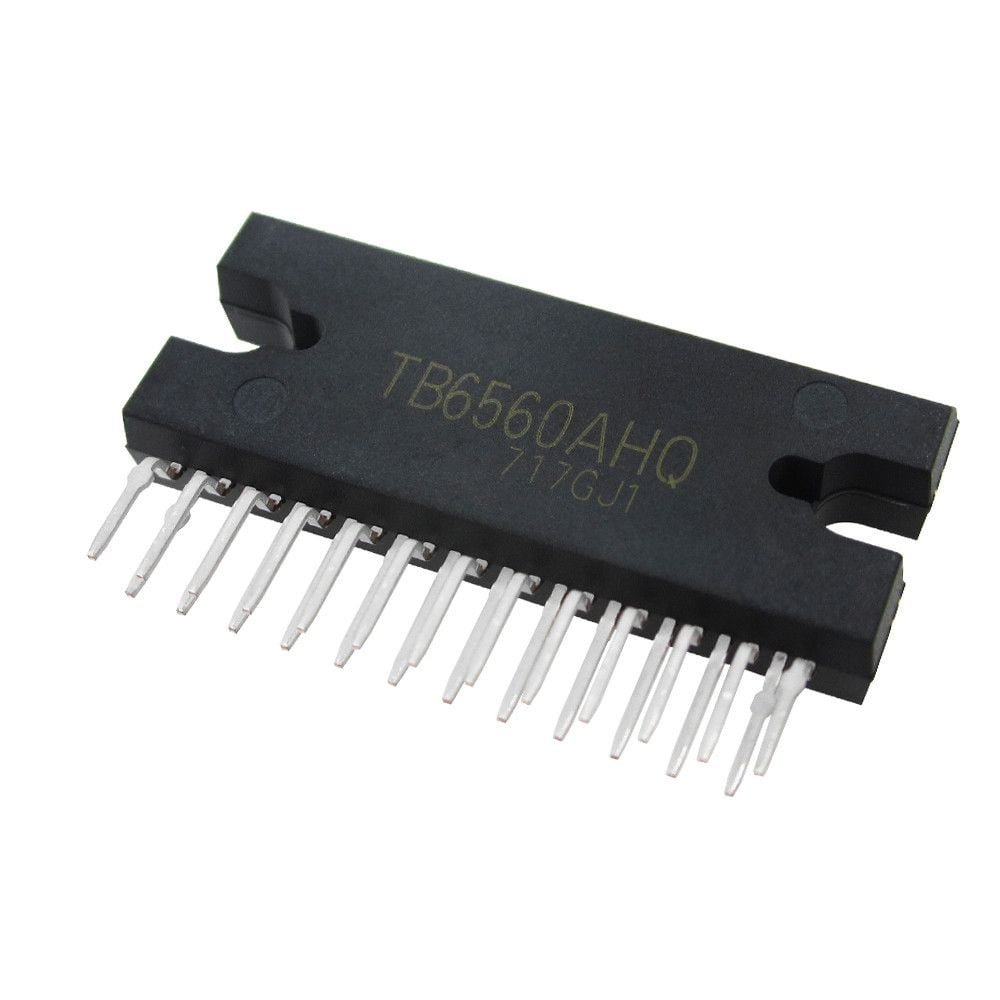
TB6560 Stepper Motor Driver IC
Original price was: ₨1,050.00.₨929.00Current price is: ₨929.00. Quick ViewThe latest 3rd generation TB6565 Stepper Driver has been upgraded to the intelligent, professional and industrial-level drive, embedding intelligent memory chip and upgrading the external manual control tools.
-
 Out Of Stock
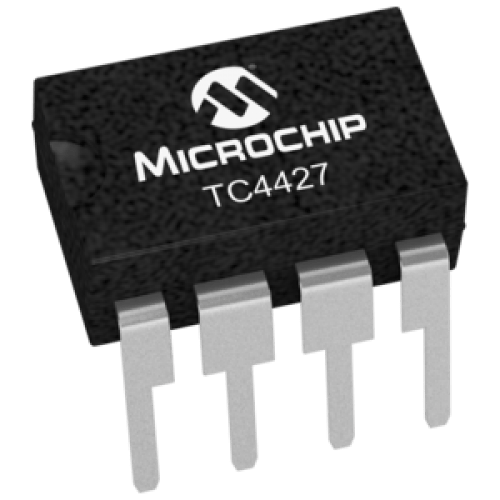
TC 4427 is a dual high speed power mosfet driver. ThIS device IS highly latch-up resistant under any conditions within their power and voltage ratings. All terminals are fully protected against Electrostatic Discharge (ESD).
-

The main use is for audio frequency amplifier applications. It can also be used for the switching purpose just like other PNP transistors. When use as an Audio frequency general purpose amplifier, can be operated in the active region. This transistor is further divided into four groups according to the DC current gain, O, Y, G, and L and has 140, 240, 400 and 700 hfe DC current gain respectively.
-
-20%
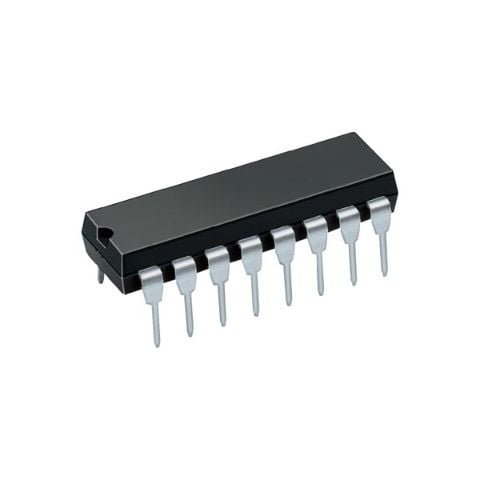
CD4033 is a simple decoder IC that is commonly used to drive Seven segment displays.
-
-18%

9N90 is a N-Channel enhancement mode power mosfet.
-

It is an integrated circuit that converts the signals from the RS232 serial port to the proper signal which is used in the TTL compatible digital logic circuits. The MAX232 can convert the signals like RX, TX, CTS, and RTS and it is a dual driver/receiver.
-
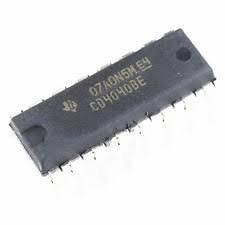
The Exclusive OR gates are monolithic complementary MOS (CMOS) integrated circuits constructed with N-Channel and P-Channel enhancement mode transistors. All inputs are protected against static discharge with diodes to VDD and VSS.
-
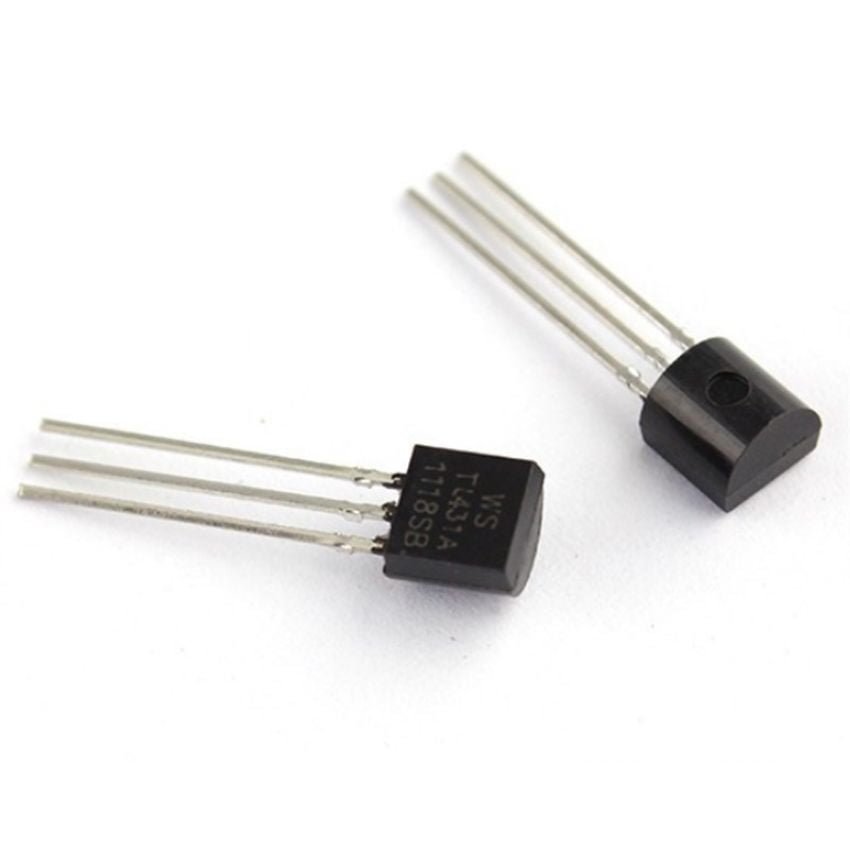
The TL431 is three-terminal adjustable shunt regulators, with specified thermal stability over applicable automotive, commercial, and military temperature ranges. The output voltage can be set to any value between Vref (approximately 2.5 V) and 36 V, with two external resistors. These devices have a typical output impedance of 0.2 .
-
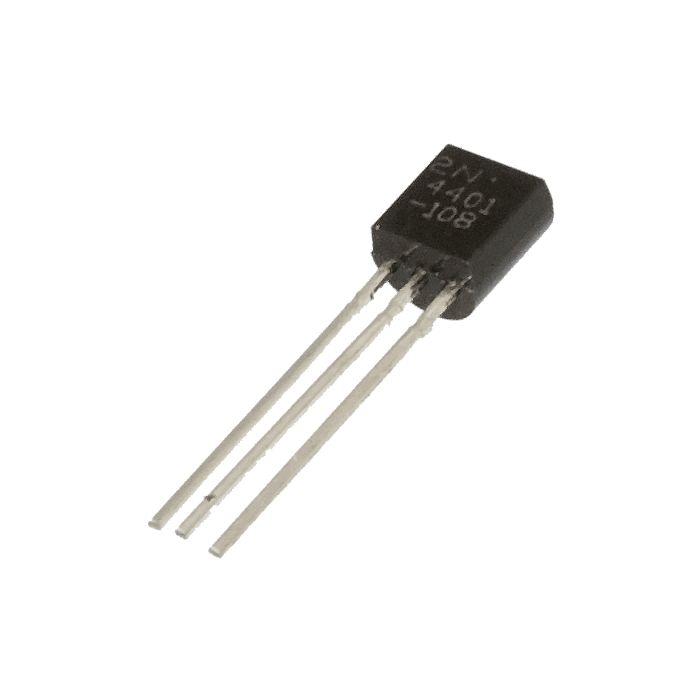
2N4401 is an NPN bipolar junction transistor that is mainly designed for general purpose, small signal, and switching applications.
-
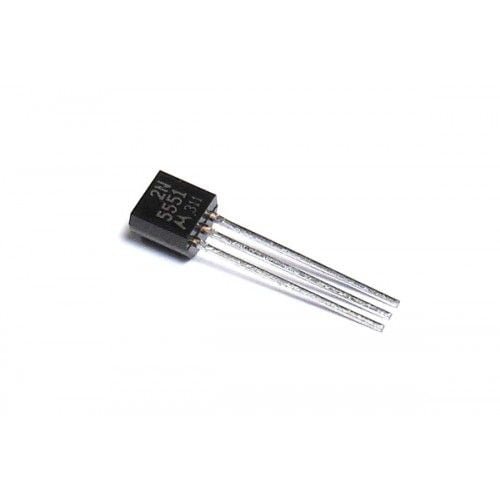
2N5551 is an NPN amplifier Transistor with an amplification factor (hfe) of 80 when the collector current is 10mA. The transistor is commonly used for amplification of audio or other low power signals.
-
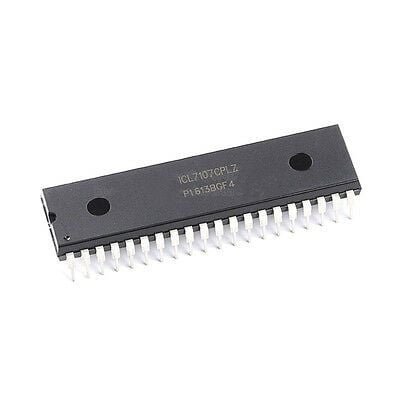
- Guaranteed zero reading for 0 V input on all scales
- True polarity at zero for precise null detection
- 1pA typical input current
- True differential input and reference, direct display drive – LED lCL7107
- Low noise – less than 15 VP-P
- On-chip clock and reference
- Low power dissipation – typically less than 10mW
- No additional active circuits required
- Enhanced display stability
- Pb-free (RoHS compliant)
-

The 2N2905 from Multicomp Pro is a through-hole, silicon planar PNP low power bipolar transistors in a TO-39 metal can package. These are general-purpose transistors suitable for switching applications.
-
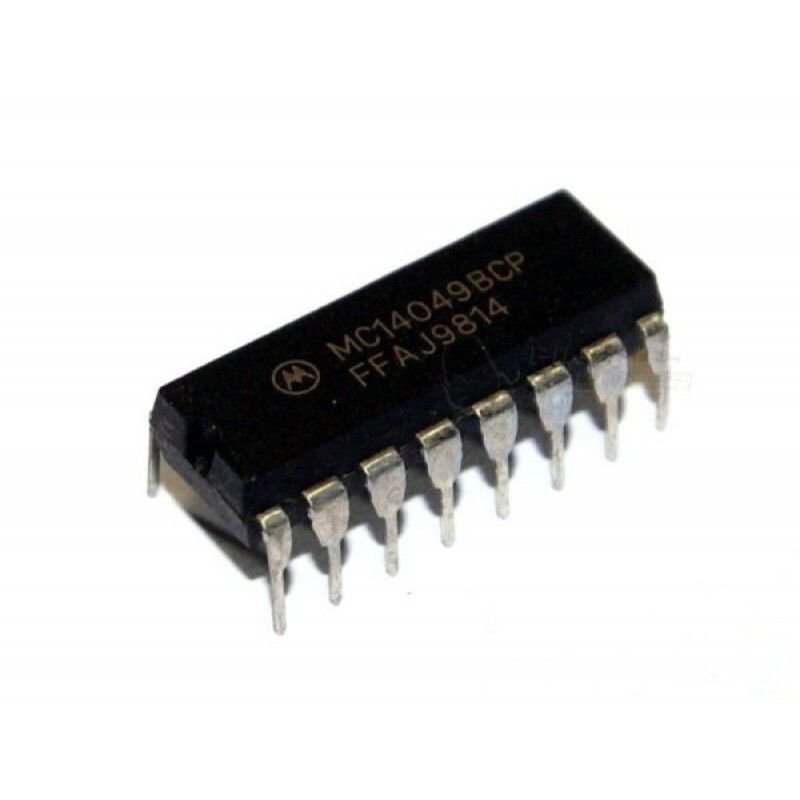
This device is designed for use where the output voltage is a product of an input voltage (signal) and a switching function (carrier). Typical applications include suppressed carrier and amplitude modulation, synchronous detection, FM detection, phase detection, and chopper applications.
-
-28%
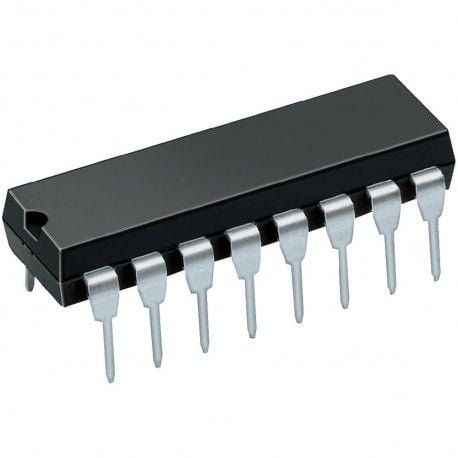
74LS47 IC – Common Anode LED Driver
Original price was: ₨90.00.₨65.00Current price is: ₨65.00. Quick View74LS47 is a BCD to 7-segment decoder/driver IC. It accepts a binary coded decimal as input and converts it into a pattern to drive a seven-segment for displaying digits 0 to 9.
-
-20%
 Out Of Stock
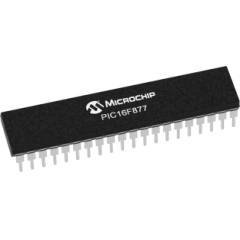
PIC 16F877 Microcontroller
Original price was: ₨1,500.00.₨1,199.00Current price is: ₨1,199.00. Quick ViewThis robust (200 nanosecond instruction execution) yet easy-to-program (only 35 single word instructions) CMOS FLASH-based 8-bit microcontroller packs Microchip’s robust PIC® architecture into a 40- or 44-pin package. It is upwards compatible with the PIC16C5X, PIC12CXXX and PIC16C7X devices. The PIC16F877A features 256 bytes of EEPROM data memory, self-programming, an ICD, 2 Comparators, 8 channels of 10-bit Analog-to-Digital (A/D) converter, 2 capture/compare/PWM functions, the synchronous serial port can be configured as either 3-wire Serial Peripheral Interface (SPI™) or the 2-wire Inter-Integrated Circuit (I²C™) bus and a Universal Asynchronous Receiver Transmitter (USART). These features make it ideal for more advanced level A/D applications in automotive, industrial, appliances and consumer applications.
-

10V-1.5W Zener Diode, general purpose zener diode used in many circuits.
-
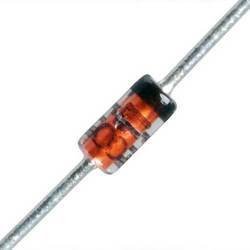
- Xener Diode 9V
- Power 0.5W (1/2 watt)
- Good Quality
- Bread Board Mount
-
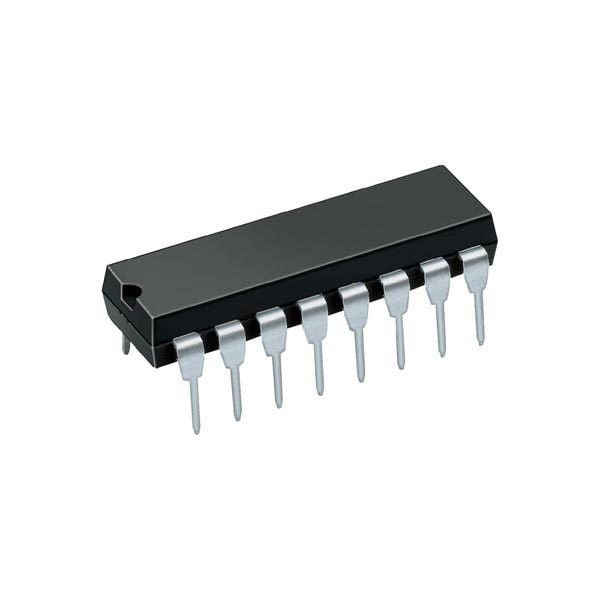
ULN2004 Features
- Output current (single output): 500mA (MAX.)
- High sustaining voltage output: 50V (MIN.)
- Output clamp diodes
- Inputs compatible with various types of logic
-
-44%

74LS158 is a high speed Quad 2-input Multiplexer. It selects four bits of data from two sources using the common Select and Enable inputs.
-
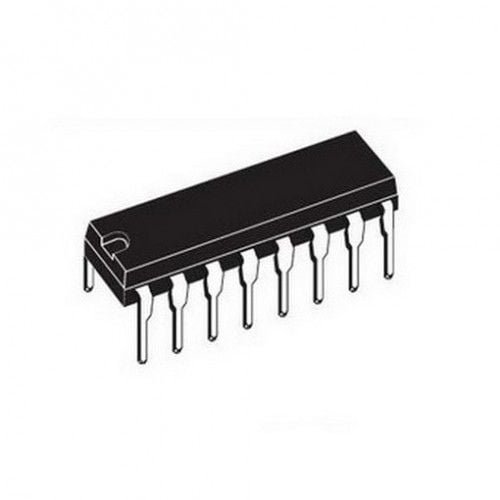
Features
- High Speed Operation: tpd (CLK to Y) = 20 ns typ (CL = 50 pF)
- High Output Current: Fanout of 10 LSTTL Loads
- Wide Operating Voltage: VCC = 2 V to 6 V
- Low Input Current: 1 µA max
- Low Quiescent Supply Current: ICC (static) = 4 µA max (Ta = 25°C)
-
-29% Out Of Stock
Center Tapped Transformer 9V 1.5AMP
Original price was: ₨450.00.₨319.00Current price is: ₨319.00. Quick ViewSpecifications:
- Input Voltage: 220V/AC
- Output Voltage: 9V/AC
- Output current: 1.5 A
- Power : 24 Watts
- Phase: Single Phase
- Frequency:50Hz
- Cooling Type: Dry Type/Air Cooled
- Material: CRGO core and Super enameled copper wire
- Dimensions:85×42.6x50mm
-
-15% Out Of Stock
Center Tapped Transformer 9V 0.4Amp
Original price was: ₨350.00.₨299.00Current price is: ₨299.00. Quick View- Input Voltage: 220V/AC
- Output Voltage: 9V/AC
- Output current: 0.4 A
- Power : 24 Watts
- Phase: Single Phase
- Frequency:50Hz
- Cooling Type: Dry Type/Air Cooled
- Material: CRGO core and Super enameled copper wire
- Dimensions:85×42.6x50mm
-
-11%
Transformer 12V Center Tapped 3AMP
Original price was: ₨620.00.₨549.00Current price is: ₨549.00. Quick View- Output current: 3A
- Supply voltage: 220-230VAC
- Output voltage: 12-0-12VAC
- Soft Iron Core
- 1A Current Drain
-
-14%
Center Tapped Transformer 12V 2.5AMP
Original price was: ₨520.00.₨449.00Current price is: ₨449.00. Quick View- Step-down Centre tapped Transformer
- Input Voltage: 220V AC at 50Hz
- Output Voltage: 12V, 12V or 0V
- Output Current: 2.5A
- Vertical mount type
- Low cost and small package
-
-15%
Center Tapped Transformer 12V 1.5Amp
Original price was: ₨350.00.₨299.00Current price is: ₨299.00. Quick View- Input Voltage: 220V/AC
- Output Voltage: 12V/AC
- Output current: 1.5 A
- Power : 24 Watts
- Phase: Single Phase
- Frequency:50Hz
- Cooling Type: Dry Type/Air Cooled
- Material: CRGO core and Super enameled copper wire
- Dimensions:85×42.6x50mm
-
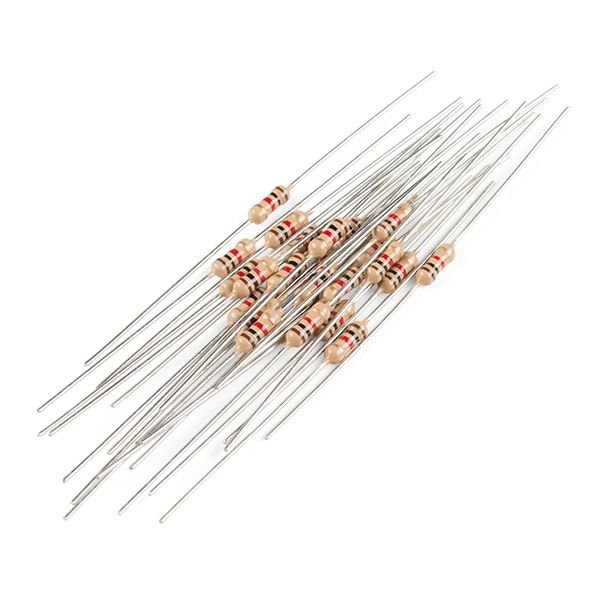
- 5% through hole Resistor
- 1/4 Watt
- 0.25 Watt
-
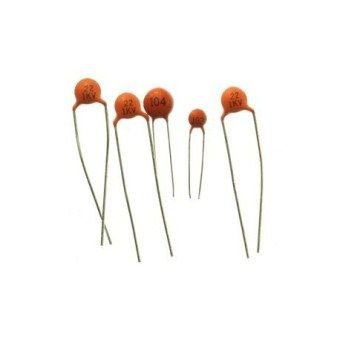
- Ceramic Type Capacitor
- 470pf (471)
- Volt; 50V
- Capacitor Tolerance: 10%.
- Color: As pictures
- Structure: Fixed capacitors
-
A ceramic capacitor is a fixed-value capacitor where the ceramic material acts as the dielectric. The value of 224 ceramic capacitor is 220nF.
-
-50%

3mm Frosted LEDs bright 3mm LEDs are incredibly bright with a wide beam angle. They’re suitable for use in your projects, illuminations, car lighting, models or anywhere where you need low power, high-intensity reliable lighting or indication. They fit easily into a breadboard and will add that extra zing to your project.
The lens has a frosted effect, which distributes the light evenly. Excellent for use in all types of indicators where an unfocused light is desirable. They work well mounted in our 3mm LED Holders and the light produced from the Red, Green, Blue, Yellow, or White LED appears very crisp and clean.
-
-8%
Multiturn Variable Potentiometer 1K
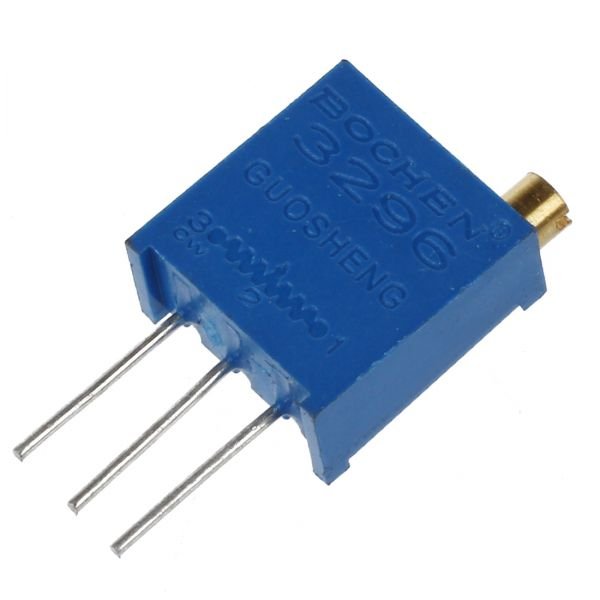
Original price was: ₨600.00.₨550.00Current price is: ₨550.00. Quick ViewA potentiometer is a manually adjustable variable resistor with 3 terminals. Two terminals are connected to both ends of a resistive element, and the third terminal connects to a sliding contact, called a wiper, moving over the resistive element. The position of the wiper determines the output voltage of the potentiometer.
-
Multiturn Variable Potentiometer 10K / Variable Resistor. There are lots of trimpots out there. Some are very large, some so small they require a screwdriver. Here at ELECTRONATION, we just needed a simple one that worked. This 10K trimmable potentiometer has a small knob built right in and it’s breadboard friendly to boot! Perfect for your next LCD contrast adjuster, opamp setting, or volume level. This is 3296W model 103 within the datasheet.
-
-20%
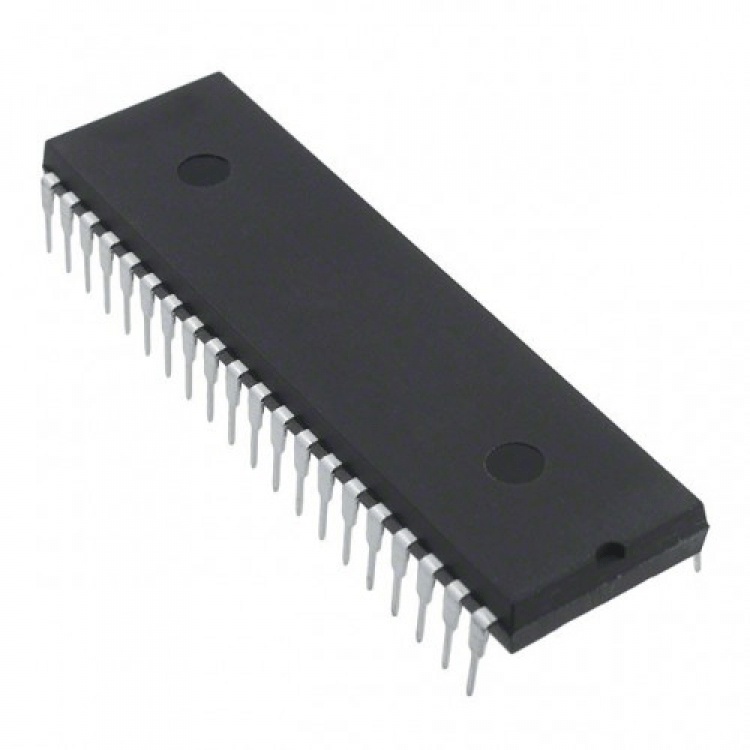
8051 Atmel AT89C51 Microcontroller 8-bit
Original price was: ₨500.00.₨399.00Current price is: ₨399.00. Quick View- Compatible with MCS-51 Products
- 4K Bytes of In-System Reprogrammable Flash Memory
- Endurance: 1,000 Write/Erase Cycles
- Fully Static Operation: 0 Hz to 24 MHz
- Three-Level Program Memory Lock
- 128 x 8-Bit Internal RAM
- 32 Programmable I/O Lines
- Two 16-Bit Timer/Counters
- Six Interrupt Sources
- Programmable Serial Channel
- Low Power Idle and Power Down Modes
-
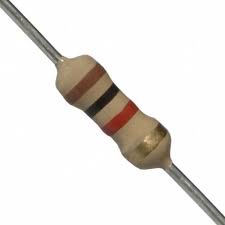
Specifications:
- Power (Watts) 1W
- Resistant 1K OHMS
- Tolerance +- 5%
- Resistor Type Carbon Film
- Lead Free
-
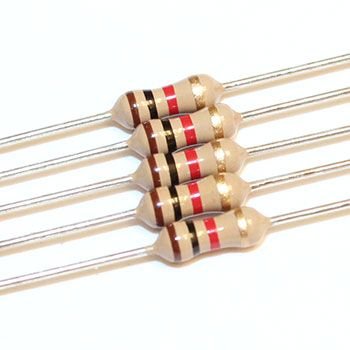
Resistors are electronic components which have a specific, never-changing electrical resistance. The resistor’s resistance limits the flow of electrons through a circuit. They are passive components, meaning they only consume power (and can’t generate it). Resistors are usually added to circuits where they complement active components like op-amps, microcontrollers, and other integrated circuits. Commonly resistors are used to limit current, divide voltages, and pull-up I/O lines.
-
Resistors are electronic components that have a specific, never-changing electrical resistance. The resistor’s resistance limits the flow of electrons through a circuit. They are passive components, meaning they only consume power (and can’t generate it). Resistors are usually added to circuits where they complement active components like op-amps, microcontrollers, and other integrated circuits. Common resistors are used to limit current, divide voltages, and pull up I/O lines.
-
Resistors are electronic components which have a specific, never-changing electrical resistance. The resistors resistance limits the flow of electrons through a circuit. They are passive components, meaning they only consume power (and cant generate it). Resistors are usually added to circuits where they complement active components like op-amps, microcontrollers, and other integrated circuits. Commonly resistors are used to limit current, divide voltages, and pull-up I/O lines.
-
Resistors are electronic components which have a specific, never-changing electrical resistance. The resistors resistance limits the flow of electrons through a circuit. They are passive components, meaning they only consume power (and cant generate it). Resistors are usually added to circuits where they complement active components like op-amps, microcontrollers, and other integrated circuits. Commonly resistors are used to limit current, divide voltages, and pull-up I/O lines.
-
Resistors are electronic components which have a specific, never-changing electrical resistance. The resistors resistance limits the flow of electrons through a circuit. They are passive components, meaning they only consume power (and cant generate it). Resistors are usually added to circuits where they complement active components like op-amps, microcontrollers, and other integrated circuits. Commonly resistors are used to limit current, divide voltages, and pull-up I/O lines.
-
Resistors are electronic components which have a specific, never-changing electrical resistance. The resistors resistance limits the flow of electrons through a circuit. They are passive components, meaning they only consume power (and cant generate it). Resistors are usually added to circuits where they complement active components like op-amps, microcontrollers, and other integrated circuits. Commonly resistors are used to limit current, divide voltages, and pull-up I/O lines.
-
Resistors are electronic components which have a specific, never-changing electrical resistance. The resistors resistance limits the flow of electrons through a circuit. They are passive components, meaning they only consume power (and can’t generate it). Resistors are usually added to circuits where they complement active components like op-amps, microcontrollers, and other integrated circuits. Commonly resistors are used to limit current, divide voltages, and pull-up I/O lines.
-
Resistors are electronic components which have a specific, never-changing electrical resistance. The resistor’s resistance limits the flow of electrons through a circuit. They are passive components, meaning they only consume power (and cant generate it). Resistors are usually added to circuits where they complement active components like op-amps, microcontrollers, and other integrated circuits. Commonly resistors are used to limit current, divide voltages, and pull-up I/O lines.
-
Resistors are electronic components which have a specific, never-changing electrical resistance. The resistors resistance limits the flow of electrons through a circuit. They are passive components, meaning they only consume power (and cant generate it). Resistors are usually added to circuits where they complement active components like op-amps, microcontrollers, and other integrated circuits. Commonly resistors are used to limit current, divide voltages, and pull-up I/O lines.
-
Resistors are electronic components that have a specific, never-changing electrical resistance. The resistor’s resistance limits the flow of electrons through a circuit. They are passive components, meaning they only consume power (and can’t generate it). Resistors are usually added to circuits where they complement active components like op-amps, microcontrollers, and other integrated circuits. Common resistors are used to limit current, divide voltages, and pull up I/O lines.
-
Resistors are electronic components which have a specific, never-changing electrical resistance. The resistors resistance limits the flow of electrons through a circuit. They are passive components, meaning they only consume power (and cant generate it). Resistors are usually added to circuits where they complement active components like op-amps, microcontrollers, and other integrated circuits. Commonly resistors are used to limit current, divide voltages, and pull-up I/O lines.
-
Resistors are electronic components which have a specific, never-changing electrical resistance. The resistors resistance limits the flow of electrons through a circuit. They are passive components, meaning they only consume power (and cant generate it). Resistors are usually added to circuits where they complement active components like op-amps, microcontrollers, and other integrated circuits. Commonly resistors are used to limit current, divide voltages, and pull-up I/O lines.
-
Resistors are electronic components which have a specific, never-changing electrical resistance. The resistors resistance limits the flow of electrons through a circuit. They are passive components, meaning they only consume power (and cant generate it). Resistors are usually added to circuits where they complement active components like op-amps, microcontrollers, and other integrated circuits. Commonly resistors are used to limit current, divide voltages, and pull-up I/O lines.
-
Resistors are electronic components which have a specific, never-changing electrical resistance. The resistors resistance limits the flow of electrons through a circuit. They are passive components, meaning they only consume power (and cant generate it). Resistors are usually added to circuits where they complement active components like op-amps, microcontrollers, and other integrated circuits. Commonly resistors are used to limit current, divide voltages, and pull-up I/O lines.
-
Resistors are electronic components which have a specific, never-changing electrical resistance. The resistors resistance limits the flow of electrons through a circuit. They are passive components, meaning they only consume power (and cant generate it). Resistors are usually added to circuits where they complement active components like op-amps, microcontrollers, and other integrated circuits. Commonly resistors are used to limit current, divide voltages, and pull-up I/O lines.
-
Resistors are electronic components which have a specific, never-changing electrical resistance. The resistors resistance limits the flow of electrons through a circuit. They are passive components, meaning they only consume power (and cant generate it). Resistors are usually added to circuits where they complement active components like op-amps, microcontrollers, and other integrated circuits. Commonly resistors are used to limit current, divide voltages, and pull-up I/O lines.
-
Resistors are electronic components which have a specific, never-changing electrical resistance. The resistors resistance limits the flow of electrons through a circuit. They are passive components, meaning they only consume power (and cant generate it). Resistors are usually added to circuits where they complement active components like op-amps, microcontrollers, and other integrated circuits. Commonly resistors are used to limit current, divide voltages, and pull-up I/O lines.
-
Resistors are electronic components which have a specific, never-changing electrical resistance. The resistors resistance limits the flow of electrons through a circuit. They are passive components, meaning they only consume power (and cant generate it). Resistors are usually added to circuits where they complement active components like op-amps, microcontrollers, and other integrated circuits. Commonly resistors are used to limit current, divide voltages, and pull-up I/O lines.
-
Resistors are electronic components which have a specific, never-changing electrical resistance. The resistors resistance limits the flow of electrons through a circuit. They are passive components, meaning they only consume power (and cant generate it). Resistors are usually added to circuits where they complement active components like op-amps, microcontrollers, and other integrated circuits. Commonly resistors are used to limit current, divide voltages, and pull-up I/O lines.
-
Resistors are electronic components which have a specific, never-changing electrical resistance. The resistors resistance limits the flow of electrons through a circuit. They are passive components, meaning they only consume power (and cant generate it). Resistors are usually added to circuits where they complement active components like op-amps, microcontrollers, and other integrated circuits. Commonly resistors are used to limit current, divide voltages, and pull-up I/O lines.
-
Resistors are electronic components which have a specific, never-changing electrical resistance. The resistors resistance limits the flow of electrons through a circuit. They are passive components, meaning they only consume power (and cant generate it). Resistors are usually added to circuits where they complement active components like op-amps, microcontrollers, and other integrated circuits. Commonly resistors are used to limit current, divide voltages, and pull-up I/O lines.
-
Resistors are electronic components which have a specific, never-changing electrical resistance. The resistors resistance limits the flow of electrons through a circuit. They are passive components, meaning they only consume power (and cant generate it). Resistors are usually added to circuits where they complement active components like op-amps, microcontrollers, and other integrated circuits. Commonly resistors are used to limit current, divide voltages, and pull-up I/O lines.
-
Resistors are electronic components which have a specific, never-changing electrical resistance. The resistor’s resistance limits the flow of electrons through a circuit. They are passive components, meaning they only consume power (and can’t generate it). Resistors are usually added to circuits where they complement active components like op-amps, microcontrollers, and other integrated circuits. Commonly resistors are used to limit current, divide voltages, and pull-up I/O lines.
-
Resistors are electronic components which have a specific, never-changing electrical resistance. The resistor’s resistance limits the flow of electrons through a circuit. They are passive components, meaning they only consume power (and can’t generate it). Resistors are usually added to circuits where they complement active components like op-amps, microcontrollers, and other integrated circuits. Commonly resistors are used to limit current, divide voltages, and pull-up I/O lines.
-
Resistors are electronic components which have a specific, never-changing electrical resistance. The resistors resistance limits the flow of electrons through a circuit. They are passive components, meaning they only consume power (and cant generate it). Resistors are usually added to circuits where they complement active components like op-amps, microcontrollers, and other integrated circuits. Commonly resistors are used to limit current, divide voltages, and pull-up I/O lines.
-
Resistors are electronic components which have a specific, never-changing electrical resistance. The resistors resistance limits the flow of electrons through a circuit. They are passive components, meaning they only consume power (and cant generate it). Resistors are usually added to circuits where they complement active components like op-amps, microcontrollers, and other integrated circuits. Commonly resistors are used to limit current, divide voltages, and pull-up I/O lines.
-
Resistors are electronic components which have a specific, never-changing electrical resistance. The resistors resistance limits the flow of electrons through a circuit. They are passive components, meaning they only consume power (and cant generate it). Resistors are usually added to circuits where they complement active components like op-amps, microcontrollers, and other integrated circuits. Commonly resistors are used to limit current, divide voltages, and pull-up I/O lines.
-
Resistors are electronic components which have a specific, never-changing electrical resistance. The resistor’s resistance limits the flow of electrons through a circuit. They are passive components, meaning they only consume power (and can’t generate it). Resistors are usually added to circuits where they complement active components like op-amps, microcontrollers, and other integrated circuits. Commonly resistors are used to limit current, divide voltages, and pull-up I/O lines.
-
Resistors are electronic components which have a specific, never-changing electrical resistance. The resistor’s resistance limits the flow of electrons through a circuit. They are passive components, meaning they only consume power (and can’t generate it). Resistors are usually added to circuits where they complement active components like op-amps, microcontrollers, and other integrated circuits. Commonly resistors are used to limit current, divide voltages, and pull-up I/O lines.
-
Resistors are electronic components which have a specific, never-changing electrical resistance. The resistor’s resistance limits the flow of electrons through a circuit. They are passive components, meaning they only consume power (and can’t generate it). Resistors are usually added to circuits where they complement active components like op-amps, microcontrollers, and other integrated circuits. Commonly resistors are used to limit current, divide voltages, and pull-up I/O lines.
-
Resistors are electronic components which have a specific, never-changing electrical resistance. The resistor’s resistance limits the flow of electrons through a circuit. They are passive components, meaning they only consume power (and can’t generate it). Resistors are usually added to circuits where they complement active components like op-amps, microcontrollers, and other integrated circuits. Commonly resistors are used to limit current, divide voltages, and pull-up I/O lines.
-
Resistors are electronic components which have a specific, never-changing electrical resistance. The resistors resistance limits the flow of electrons through a circuit. They are passive components, meaning they only consume power (and cant generate it). Resistors are usually added to circuits where they complement active components like op-amps, microcontrollers, and other integrated circuits. Commonly resistors are used to limit current, divide voltages, and pull-up I/O lines.
-
Resistors are electronic components which have a specific, never-changing electrical resistance. The resistor’s resistance limits the flow of electrons through a circuit. They are passive components, meaning they only consume power (and cant generate it). Resistors are usually added to circuits where they complement active components like op-amps, microcontrollers, and other integrated circuits. Commonly resistors are used to limit current, divide voltages, and pull-up I/O lines.
-
Resistors are electronic components which have a specific, never-changing electrical resistance. The resistor’s resistance limits the flow of electrons through a circuit. They are passive components, meaning they only consume power (and can’t generate it). Resistors are usually added to circuits where they complement active components like op-amps, microcontrollers, and other integrated circuits. Commonly resistors are used to limit current, divide voltages, and pull-up I/O lines.
-
Resistors are electronic components which have a specific, never-changing electrical resistance. The resistor’s resistance limits the flow of electrons through a circuit. They are passive components, meaning they only consume power (and can’t generate it). Resistors are usually added to circuits where they complement active components like op-amps, microcontrollers, and other integrated circuits. Commonly resistors are used to limit current, divide voltages, and pull-up I/O lines.
-
Resistors are electronic components which have a specific, never-changing electrical resistance. The resistor’s resistance limits the flow of electrons through a circuit. They are passive components, meaning they only consume power (and can’t generate it). Resistors are usually added to circuits where they complement active components like op-amps, microcontrollers, and other integrated circuits. Commonly resistors are used to limit current, divide voltages, and pull-up I/O lines.
-
Resistors are electronic components which have a specific, never-changing electrical resistance. The resistor’s resistance limits the flow of electrons through a circuit. They are passive components, meaning they only consume power (and can’t generate it). Resistors are usually added to circuits where they complement active components like op-amps, microcontrollers, and other integrated circuits. Commonly resistors are used to limit current, divide voltages, and pull-up I/O lines.
-
Resistors are electronic components which have a specific, never-changing electrical resistance. The resistor’s resistance limits the flow of electrons through a circuit. They are passive components, meaning they only consume power (and can’t generate it). Resistors are usually added to circuits where they complement active components like op-amps, microcontrollers, and other integrated circuits. Commonly resistors are used to limit current, divide voltages, and pull-up I/O lines.
-
Resistors are electronic components which have a specific, never-changing electrical resistance. The resistor’s resistance limits the flow of electrons through a circuit. They are passive components, meaning they only consume power (and can’t generate it). Resistors are usually added to circuits where they complement active components like op-amps, microcontrollers, and other integrated circuits. Commonly resistors are used to limit current, divide voltages, and pull-up I/O lines.
-
Resistors are electronic components which have a specific, never-changing electrical resistance. The resistor’s resistance limits the flow of electrons through a circuit. They are passive components, meaning they only consume power (and can’t generate it). Resistors are usually added to circuits where they complement active components like op-amps, microcontrollers, and other integrated circuits. Commonly resistors are used to limit current, divide voltages, and pull-up I/O lines.
-
Resistors are electronic components which have a specific, never-changing electrical resistance. The resistor’s resistance limits the flow of electrons through a circuit. They are passive components, meaning they only consume power (and can’t generate it). Resistors are usually added to circuits where they complement active components like op-amps, microcontrollers, and other integrated circuits. Commonly resistors are used to limit current, divide voltages, and pull-up I/O lines.
-
Resistors are electronic components which have a specific, never-changing electrical resistance. The resistor’s resistance limits the flow of electrons through a circuit. They are passive components, meaning they only consume power (and can’t generate it). Resistors are usually added to circuits where they complement active components like op-amps, microcontrollers, and other integrated circuits. Commonly resistors are used to limit current, divide voltages, and pull-up I/O lines.
-
Resistors are electronic components which have a specific, never-changing electrical resistance. The resistor’s resistance limits the flow of electrons through a circuit. They are passive components, meaning they only consume power (and can’t generate it). Resistors are usually added to circuits where they complement active components like op-amps, microcontrollers, and other integrated circuits. Commonly resistors are used to limit current, divide voltages, and pull-up I/O lines.
-
Resistors are electronic components which have a specific, never-changing electrical resistance. The resistor’s resistance limits the flow of electrons through a circuit. They are passive components, meaning they only consume power (and can’t generate it). Resistors are usually added to circuits where they complement active components like op-amps, microcontrollers, and other integrated circuits. Commonly resistors are used to limit current, divide voltages, and pull-up I/O lines.
-
Resistors are electronic components which have a specific, never-changing electrical resistance. The resistor’s resistance limits the flow of electrons through a circuit. They are passive components, meaning they only consume power (and can’t generate it). Resistors are usually added to circuits where they complement active components like op-amps, microcontrollers, and other integrated circuits. Commonly resistors are used to limit current, divide voltages, and pull-up I/O lines.
-
Resistors are electronic components which have a specific, never-changing electrical resistance. The resistor’s resistance limits the flow of electrons through a circuit. They are passive components, meaning they only consume power (and can’t generate it). Resistors are usually added to circuits where they complement active components like op-amps, microcontrollers, and other integrated circuits. Commonly resistors are used to limit current, divide voltages, and pull-up I/O lines.
-
Resistors are electronic components which have a specific, never-changing electrical resistance. The resistor’s resistance limits the flow of electrons through a circuit. They are passive components, meaning they only consume power (and can’t generate it). Resistors are usually added to circuits where they complement active components like op-amps, microcontrollers, and other integrated circuits. Commonly resistors are used to limit current, divide voltages, and pull-up I/O lines.
-
Resistors are electronic components which have a specific, never-changing electrical resistance. The resistor’s resistance limits the flow of electrons through a circuit. They are passive components, meaning they only consume power (and can’t generate it). Resistors are usually added to circuits where they complement active components like op-amps, microcontrollers, and other integrated circuits. Commonly resistors are used to limit current, divide voltages, and pull-up I/O lines.
-
Resistors are electronic components which have a specific, never-changing electrical resistance. The resistor’s resistance limits the flow of electrons through a circuit. They are passive components, meaning they only consume power (and can’t generate it). Resistors are usually added to circuits where they complement active components like op-amps, microcontrollers, and other integrated circuits. Commonly resistors are used to limit current, divide voltages, and pull-up I/O lines.
-
Resistors are electronic components which have a specific, never-changing electrical resistance. The resistor’s resistance limits the flow of electrons through a circuit. They are passive components, meaning they only consume power (and can’t generate it). Resistors are usually added to circuits where they complement active components like op-amps, microcontrollers, and other integrated circuits. Commonly resistors are used to limit current, divide voltages, and pull-up I/O lines.
-
Resistors are electronic components which have a specific, never-changing electrical resistance. The resistor’s resistance limits the flow of electrons through a circuit. They are passive components, meaning they only consume power (and can’t generate it). Resistors are usually added to circuits where they complement active components like op-amps, microcontrollers, and other integrated circuits. Commonly resistors are used to limit current, divide voltages, and pull-up I/O lines.
-
Resistors are electronic components which have a specific, never-changing electrical resistance. The resistor’s resistance limits the flow of electrons through a circuit. They are passive components, meaning they only consume power (and can’t generate it). Resistors are usually added to circuits where they complement active components like op-amps, microcontrollers, and other integrated circuits. Commonly resistors are used to limit current, divide voltages, and pull-up I/O lines.
-
Resistors are electronic components which have a specific, never-changing electrical resistance. The resistor’s resistance limits the flow of electrons through a circuit. They are passive components, meaning they only consume power (and can’t generate it). Resistors are usually added to circuits where they complement active components like op-amps, microcontrollers, and other integrated circuits. Commonly resistors are used to limit current, divide voltages, and pull-up I/O lines.
-
Resistors are electronic components which have a specific, never-changing electrical resistance. The resistor’s resistance limits the flow of electrons through a circuit. They are passive components, meaning they only consume power (and can’t generate it). Resistors are usually added to circuits where they complement active components like op-amps, microcontrollers, and other integrated circuits. Commonly resistors are used to limit current, divide voltages, and pull-up I/O lines.
-
Resistors are electronic components which have a specific, never-changing electrical resistance. The resistor’s resistance limits the flow of electrons through a circuit. They are passive components, meaning they only consume power (and can’t generate it). Resistors are usually added to circuits where they complement active components like op-amps, microcontrollers, and other integrated circuits. Commonly resistors are used to limit current, divide voltages, and pull-up I/O lines.
-
Resistors are electronic components which have a specific, never-changing electrical resistance. The resistor’s resistance limits the flow of electrons through a circuit. They are passive components, meaning they only consume power (and can’t generate it). Resistors are usually added to circuits where they complement active components like op-amps, microcontrollers, and other integrated circuits. Commonly resistors are used to limit current, divide voltages, and pull-up I/O lines.
-
Resistors are electronic components which have a specific, never-changing electrical resistance. The resistor’s resistance limits the flow of electrons through a circuit. They are passive components, meaning they only consume power (and can’t generate it). Resistors are usually added to circuits where they complement active components like op-amps, microcontrollers, and other integrated circuits. Commonly resistors are used to limit current, divide voltages, and pull-up I/O lines.
-
Resistors are electronic components which have a specific, never-changing electrical resistance. The resistor’s resistance limits the flow of electrons through a circuit. They are passive components, meaning they only consume power (and can’t generate it). Resistors are usually added to circuits where they complement active components like op-amps, microcontrollers, and other integrated circuits. Commonly resistors are used to limit current, divide voltages, and pull-up I/O lines.
-
Resistors are electronic components which have a specific, never-changing electrical resistance. The resistor’s resistance limits the flow of electrons through a circuit. They are passive components, meaning they only consume power (and can’t generate it). Resistors are usually added to circuits where they complement active components like op-amps, microcontrollers, and other integrated circuits. Commonly resistors are used to limit current, divide voltages, and pull-up I/O lines.
-
Resistors are electronic components which have a specific, never-changing electrical resistance. The resistor’s resistance limits the flow of electrons through a circuit. They are passive components, meaning they only consume power (and can’t generate it). Resistors are usually added to circuits where they complement active components like op-amps, microcontrollers, and other integrated circuits. Commonly resistors are used to limit current, divide voltages, and pull-up I/O lines.
-
Resistors are electronic components which have a specific, never-changing electrical resistance. The resistor’s resistance limits the flow of electrons through a circuit. They are passive components, meaning they only consume power (and can’t generate it). Resistors are usually added to circuits where they complement active components like op-amps, microcontrollers, and other integrated circuits. Commonly resistors are used to limit current, divide voltages, and pull-up I/O lines.
-
Resistors are electronic components which have a specific, never-changing electrical resistance. The resistor’s resistance limits the flow of electrons through a circuit. They are passive components, meaning they only consume power (and can’t generate it). Resistors are usually added to circuits where they complement active components like op-amps, microcontrollers, and other integrated circuits. Commonly resistors are used to limit current, divide voltages, and pull-up I/O lines.
-
Resistors are electronic components which have a specific, never-changing electrical resistance. The resistor’s resistance limits the flow of electrons through a circuit. They are passive components, meaning they only consume power (and can’t generate it). Resistors are usually added to circuits where they complement active components like op-amps, microcontrollers, and other integrated circuits. Commonly resistors are used to limit current, divide voltages, and pull-up I/O lines.
-
Resistors are electronic components which have a specific, never-changing electrical resistance. The resistor’s resistance limits the flow of electrons through a circuit. They are passive components, meaning they only consume power (and can’t generate it). Resistors are usually added to circuits where they complement active components like op-amps, microcontrollers, and other integrated circuits. Commonly resistors are used to limit current, divide voltages, and pull-up I/O lines.
-
Resistors are electronic components which have a specific, never-changing electrical resistance. The resistor’s resistance limits the flow of electrons through a circuit. They are passive components, meaning they only consume power (and can’t generate it). Resistors are usually added to circuits where they complement active components like op-amps, microcontrollers, and other integrated circuits. Commonly resistors are used to limit current, divide voltages, and pull-up I/O lines.
-
Resistors are electronic components which have a specific, never-changing electrical resistance. The resistor’s resistance limits the flow of electrons through a circuit. They are passive components, meaning they only consume power (and can’t generate it). Resistors are usually added to circuits where they complement active components like op-amps, microcontrollers, and other integrated circuits. Commonly resistors are used to limit current, divide voltages, and pull-up I/O lines.
-
Resistors are electronic components which have a specific, never-changing electrical resistance. The resistor’s resistance limits the flow of electrons through a circuit. They are passive components, meaning they only consume power (and can’t generate it). Resistors are usually added to circuits where they complement active components like op-amps, microcontrollers, and other integrated circuits. Commonly resistors are used to limit current, divide voltages, and pull-up I/O lines.