Buy LCD, OLED, TFT & LED Displays Online in Pakistan
Looking to buy LCD, OLED, TFT and LED display modules online in Pakistan? Electronation Pakistan offers electronic displays for Arduino, ESP32, Raspberry Pi, robotics, embedded systems, industrial monitoring, and DIY electronics projects.
Explore 16×2 LCD displays, 20×4 character LCD modules, OLED screens, graphical LCDs, TFT touchscreens, 7-segment displays, and digital display modules for electronics students, engineers, developers, technicians, and hobbyists.
Whether you’re displaying sensor readings, building a digital clock, creating an interactive control panel, or developing a microcontroller-based interface, our Electronic Display Collection helps you find suitable components at competitive prices.
Based in Karachi, Electronation Pakistan serves online customers in Lahore, Islamabad, Rawalpindi, Faisalabad, Multan, Peshawar, Hyderabad, and other cities across Pakistan.
Explore Our Electronic Display Modules
Our display collection includes different screen technologies and digital indicators for microcontroller programming, circuit prototyping, automation, and electronic projects.
- Character LCD Displays (16×2 & 20×4) – Alphanumeric screens for displaying text, system status, sensor measurements, and menu information. Explore our Character LCD 16×2 Blue Display and 20×4 Character LCD Display.
- OLED Display Modules – Compact, high-contrast electronic screens suitable for embedded interfaces, wearable projects, sensor monitoring, and IoT devices. Discover the 1.3-Inch OLED Display 128×64 and 0.96-Inch OLED Display Module.
- TFT LCD Touchscreen Displays – Color graphical screens for interactive interfaces, data visualization, electronic controllers, and automation systems. Browse the 3.5-Inch TFT Touch Screen for Arduino Mega.
- 7-Segment LED Displays – Digital indicators commonly used in clocks, counters, timers, voltage displays, and measurement instruments. Explore the 4-Digit 7-Segment Display.
- Graphical LCD Modules – Pixel-based electronic displays for showing graphics, measurements, icons, and embedded-system information. Explore the Graphical LCD 128×64.
Browse Electronic Display Categories
Find the right display technology for your project through our dedicated subcategories.
- 7-Segment & Dot Matrix Displays – Digital indicators for counters, clocks, numerical measurements, and LED-based interfaces.
- Alphanumeric LCD Displays – Character LCD screens and graphical LCD modules.
- LCD & OLED Displays – Compact screens for embedded electronics and IoT projects.
- TFT Screens & Touch Displays – Color displays for interactive electronics applications.
LCD vs OLED vs TFT – Which Display Should You Choose?
Different electronic displays offer different features, resolutions, interfaces, and power requirements. Understanding these differences helps you select the right module.
Character LCD Displays – For Text & Basic Monitoring
Character LCD modules such as 16×2 and 20×4 screens are widely used for displaying text, sensor measurements, control information, and system status.
A 16×2 LCD can display 16 characters per row across two rows, while a 20×4 LCD provides four rows with 20 character positions each.
These displays are useful for Arduino learning projects, digital thermometers, monitoring equipment, and simple embedded interfaces.
OLED Displays – For Compact, High-Contrast Interfaces
OLED modules use self-emitting pixels, allowing them to display text and graphics without a conventional LCD backlight.
Small 0.96-inch and 1.3-inch OLED modules are popular for IoT devices, compact electronics, sensor dashboards, and microcontroller projects.
Supported modules may communicate through I2C or SPI interfaces, depending on their design.
TFT LCD Displays – For Color Graphics & Touchscreen Projects
TFT displays offer color graphics, higher-resolution interfaces, and optional touchscreen functionality.
They are useful for interactive dashboards, controller interfaces, data visualization, embedded menus, and Arduino-based monitoring systems.
Always verify display driver compatibility, interface requirements, memory usage, and logic voltage before selecting a TFT screen.
7-Segment Displays – For Numbers & Digital Indicators
7-segment displays are commonly used for numerical information, including counters, timers, clocks, voltage measurements, and digital instruments.
They are available in different digit configurations, sizes, and common-anode or common-cathode arrangements.
Common Applications of Electronic Displays
Arduino & Microcontroller Projects
Display temperature, humidity, distance, voltage, and other sensor measurements using compatible LCD and OLED modules.
IoT Monitoring Systems
Create compact status displays and dashboards for ESP32, ESP8266, and connected electronics projects.
Robotics & Automation
Show motor status, sensor information, operating modes, battery readings, and system notifications.
Digital Clocks & Counters
Build electronic clocks, timers, counters, and numerical indicators using 7-segment LED displays.
Industrial Monitoring Prototypes
Develop suitable interfaces for equipment status, measurements, process information, and control-system prototypes.
University & Engineering Projects
Use LCD, OLED, and TFT displays in final-year projects, electronic laboratories, programming assignments, and embedded-system development.
DIY Electronics
Create digital thermometers, custom instruments, control panels, portable measuring devices, and interactive electronics projects.
How to Choose the Right Display Module
Before purchasing a display for Arduino, ESP32, or another microcontroller, review the following specifications.
1. Display Technology
Choose a character LCD for text-based information, an OLED for compact graphics, a TFT for color interfaces, or a 7-segment display for numerical data.
2. Screen Size & Resolution
Verify the available display dimensions and resolution. Common options include 16×2 LCDs, 20×4 LCDs, 128×64 OLEDs, and higher-resolution TFT screens.
3. Communication Interface
Check whether the display uses I2C, SPI, UART, parallel connections, or a dedicated driver interface.
4. Operating Voltage
Some displays require 3.3V logic, while others support compatible 5V systems. Confirm the module’s supply and signal voltage specifications.
5. Controller Compatibility
Ensure the display works with your Arduino UNO, Nano, Mega, ESP32, Raspberry Pi, or other development platform.
6. Driver & Library Support
Check the display controller and available programming libraries. Modules with similar screen sizes may use different driver chips.
7. Touchscreen Requirements
If your project requires interactive user input, choose a compatible TFT touchscreen instead of a display-only module.
Related Arduino & Electronics Categories
Complete your display-based projects with electronic components and development hardware from Electronation Pakistan.
- Arduino Boards & Microcontrollers – Arduino UNO, Nano, Mega, and compatible development boards.
- ESP32 & IoT Boards – Wireless controllers for connected display applications.
- Electronic Sensors – Temperature, humidity, distance, motion, and measurement sensors.
- Arduino Modules – Interface and control modules for embedded electronics.
- Wires & Connectors – Jumper wires, pin headers, and electronic connection accessories.
- Circuit Boards – Breadboards and PCBs for display circuit development.
- Power Supply Modules – Compatible power adapters and voltage converters.
- Electronic Components – Resistors, capacitors, transistors, ICs, and other circuit-building essentials.
Frequently Asked Questions About LCD, OLED & TFT Displays
Where can I buy LCD and OLED displays online in Pakistan?
You can browse LCD, OLED, TFT, 7-segment, and other electronic display modules through Electronation Pakistan’s Display Collection.
Which display is best for Arduino beginners?
A 16×2 character LCD is a popular beginner option because it is suitable for displaying text and sensor readings and has extensive Arduino learning resources.
What is the difference between a 16×2 and 20×4 LCD?
A 16×2 LCD displays two rows of 16 character positions, while a 20×4 LCD displays four rows of 20 character positions, providing more space for information.
Can I connect an OLED display to ESP32?
Yes. Compatible OLED displays can connect to ESP32 through supported interfaces such as I2C or SPI. Check voltage levels, pin connections, and driver support.
Can I use a TFT touchscreen with Arduino UNO?
Some TFT modules and shields support Arduino UNO, but compatibility depends on the screen controller, required memory, interface, electrical specifications, and software libraries.
What is the difference between I2C and SPI displays?
I2C commonly uses two shared communication signals, while SPI generally uses more signal connections and can support higher data-transfer rates.
Do all OLED displays use the SSD1306 controller?
No. OLED modules may use SSD1306, SH1106, or other controllers. Confirm the exact controller before selecting a programming library.
What is the difference between common-anode and common-cathode 7-segment displays?
In a common-anode display, the segment LEDs share a common positive connection. In a common-cathode display, they share a common negative connection. Their drive requirements differ.
Can I use an electronic display for an IoT monitoring project?
Yes. Compatible LCD, OLED, and TFT modules can display sensor values, device status, network information, and other project data.
Electronics Display Learning Resources
- Arduino Official Documentation – Learn microcontroller programming and hardware interfacing.
- Arduino LiquidCrystal Library – Resources for compatible character LCD displays.
- Adafruit GFX Graphics Library – Learn graphical display programming for supported screens.
- SparkFun Electronics Tutorials – Guides for electronic components, circuits, and modules.
- Wokwi Electronics Simulator – Simulate supported Arduino and display projects online.
Buy Arduino LCD, OLED, TFT & LED Display Modules in Pakistan
At Electronation Pakistan, we offer electronic display modules and related components for engineering students, developers, technicians, robotics enthusiasts, and DIY makers.
Whether you’re looking for a 16×2 LCD screen, a compact OLED display, a 7-segment indicator, or a TFT touchscreen for an embedded project, explore our products and select modules matching your technical requirements.
Browse the complete LCD, OLED, TFT & LED Display Collection and find components for your next electronics project.
For product inquiries and bulk requirements, contact contact@electronation.pk.
Electronation Pakistan – Learn. Innovate. Create.
- -27%


1.3 inch OLED Display 128X64 SSD1306 I2C SH1106
Original price was: ₨1,100.00.₨799.00Current price is: ₨799.00. Quick View - -52%

 Out Of Stock
2.4 TFT LCD Shield For Arduino UNO R3 (ILI9340)
Original price was: ₨2,500.00.₨1,199.00Current price is: ₨1,199.00. Quick View - -46%


2004A 20X4 Character Blue Color LCD Display
Original price was: ₨1,650.00.₨899.00Current price is: ₨899.00. Quick View - -15%


3.5 inch TFT Touch Screen for Arduino Mega
Original price was: ₨4,099.00.₨3,499.00Current price is: ₨3,499.00. Quick View - -22%

 Out Of Stock
3.5″ IPS TFT LCD for Arduino MEGA2560
Original price was: ₨5,000.00.₨3,899.00Current price is: ₨3,899.00. Quick View - -34%


4 digit 7 segment Display for Digital Clock
Original price was: ₨150.00.₨99.00Current price is: ₨99.00. Quick View - -20%


5V 1604 LCD 16×4 Character LCD Screen
Original price was: ₨1,000.00.₨799.00Current price is: ₨799.00. Quick View - -20%

 Out Of Stock
8 inch 7 segment display 8 inch seven segment led display
Original price was: ₨81.00.₨65.00Current price is: ₨65.00. Quick View - -32%


Acrylic Rectangle 0.56 Inch 3 Digit 7 Segment Display
Original price was: ₨130.00.₨89.00Current price is: ₨89.00. Quick View - -52%


Character LCD 16X2 Blue color
Original price was: ₨650.00.₨309.00Current price is: ₨309.00. Quick View - -31%

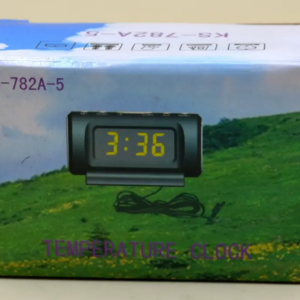
Clock Thermometer Ks-782a-5 1 Display Orange, Auto Cigarette Lighter
Original price was: ₨800.00.₨549.00Current price is: ₨549.00. Quick View - -17%


Dmc 20×4 81 JHD204A Character LCD Display
Original price was: ₨1,200.00.₨999.00Current price is: ₨999.00. Quick View 

- -20%

 Out Of Stock
LCD Green 20×2 display module (JHD202C)
Original price was: ₨315.00.₨252.00Current price is: ₨252.00. Quick View - -9%


OLED Display Module 12864 0.96 Inch 4Pin
Original price was: ₨600.00.₨549.00Current price is: ₨549.00. Quick View


