Buy OLED Display Modules Online in Pakistan – 0.96 & 1.3 Inch
Looking to buy OLED Display Modules in Pakistan for Arduino, ESP32, IoT, robotics, or embedded electronics projects? Electronation Pakistan offers compact 0.96-inch and 1.3-inch OLED screens with 128×64 pixel resolution for displaying text, sensor readings, graphical icons, and electronic system information.
OLED (Organic Light-Emitting Diode) displays produce their own light without requiring a conventional LCD backlight. Their compact dimensions, high contrast, and support for pixel-based graphics make them useful for smart devices, portable electronics, monitoring systems, and microcontroller projects.
Whether you’re creating a wireless sensor dashboard, building an Arduino digital meter, or designing an interactive embedded interface, explore our OLED Display Modules Collection to find a suitable screen.
Electronation Pakistan is based in Karachi and serves online customers across Pakistan, including Lahore, Islamabad, Rawalpindi, Faisalabad, Multan, and other supported cities.
Explore Our 0.96 & 1.3 Inch OLED Displays
0.96 Inch OLED Display Module – 128×64 I2C
The 0.96-inch OLED Display Module is a compact screen for microcontroller-based projects that need text and simple graphical output without taking up much space.
Its 128×64 pixel display can present sensor measurements, status information, icons, counters, and basic menus.
Our listed module features a four-pin connector labeled VCC, GND, SCL, and SDA. The product page identifies an SSD1306 controller and I2C connections, although its interface description should be confirmed for the exact hardware revision.
Common applications:
- Arduino temperature and humidity monitors
- ESP32 IoT sensor dashboards
- Portable electronic instruments
- Digital counters and timers
- Smart home status indicators
- Compact embedded menus
Explore the 0.96 Inch OLED Display Module 128×64 4-Pin.
1.3 Inch OLED Display Module – 128×64 I2C
The 1.3-inch OLED Display Module provides a larger viewing area while maintaining a compact form factor.
Its 128×64 resolution supports graphical interfaces, text, numerical measurements, and compatible icons for embedded electronics projects.
This screen is suitable for applications where a slightly larger display is preferred for reading information.
Common applications:
- ESP32 and ESP8266 monitoring projects
- Arduino sensor displays
- Robotics status interfaces
- Wireless environmental monitoring
- Compact instrumentation
- DIY electronic dashboards
Explore the 1.3 Inch OLED Display 128×64 I2C Module.
Controller compatibility: The product listing references both SSD1306 and SH1106. Verify the controller fitted to the supplied module before choosing a software library.
0.96 Inch vs 1.3 Inch OLED – Which Should You Choose?
Both display sizes can be useful for microcontroller programming, but their physical dimensions and application requirements differ.
Choose a 0.96-inch OLED Display if:
- Your project requires a very compact screen.
- You are designing a portable electronic device.
- Space inside the enclosure is limited.
- You need basic graphics, measurements, or short status messages.
Choose a 1.3-inch OLED Display if:
- You prefer a larger screen area.
- Your project displays several values or menu elements.
- The display will be installed in a monitoring panel.
- Readability and physical screen size are important.
Both listed options have a 128×64 pixel resolution, so the larger size does not automatically provide more pixels.
Compare their controller chips, available libraries, connector arrangements, supply requirements, and physical dimensions before purchasing.
OLED vs LCD – What’s the Difference?
OLED and LCD technologies are both useful in electronics projects, but they work differently.
OLED Displays
OLED screens use self-emitting pixels. They do not require a conventional LCD backlight and can provide high contrast with compact graphical interfaces.
They are useful for icons, text, sensor readings, and small embedded dashboards. Power consumption depends on factors such as brightness and displayed content.
Character LCD Displays
Traditional character LCD modules, such as 16×2 and 20×4 screens, organize information into fixed character positions.
They are often suitable for simple text-based interfaces, measurements, status messages, and educational Arduino projects.
If you need a character-based screen instead, explore our Character LCD & Alphanumeric Displays.
For color graphics and touchscreen applications, browse our TFT Screens & Touch Displays.
Common Applications of OLED Display Modules
Arduino Sensor Monitoring
Connect a compatible OLED module to an Arduino development board and display temperature, humidity, distance, voltage, or other sensor readings.
ESP32 & IoT Dashboards
Create wireless monitoring interfaces that show network status, sensor data, device information, and application messages.
Smart Home Automation
Display operating modes, environmental measurements, switching states, and notifications from compatible smart home controllers.
Robotics & Embedded Systems
Add a compact graphical interface to show robot status, sensor readings, battery measurements, or operating information.
Portable Electronic Instruments
Use suitable OLED modules in compact digital meters, timers, counters, and battery-powered electronics prototypes.
University & Engineering Projects
Develop embedded-system interfaces and microcontroller-based experiments for electronics laboratories, programming assignments, and engineering projects.
How to Choose the Right OLED Display Module
Before buying an OLED screen, review these important specifications.
1. Display Size
Choose a 0.96-inch or 1.3-inch display according to the available enclosure space and viewing requirements.
2. Screen Resolution
Both listed modules feature 128×64 pixel resolution, allowing compatible text and graphical output.
3. Display Controller
Check whether your module uses SSD1306, SH1106, or another controller. Different chips can require different initialization settings or graphics libraries.
4. Communication Interface
Confirm whether the exact module supports I2C, SPI, or another interface. A four-pin module labeled SDA and SCL commonly uses I2C, but the actual product configuration should be verified.
5. Operating Voltage
Review the module’s supported supply and signal voltages. Some breakout boards contain onboard regulation or interface components, while others do not.
6. Microcontroller Compatibility
Check compatibility with Arduino UNO, Nano, Mega, ESP32, ESP8266, Raspberry Pi, or another development platform.
7. Display Color
OLED modules can be supplied in different colors or color arrangements. Confirm the actual display appearance from the product photographs and verified specifications.
8. Software Library Support
Select a graphics library that supports the display’s controller, resolution, and interface configuration.
Related Arduino & Electronics Categories
Complete your display-based project with additional components from Electronation Pakistan.
- LCD, OLED, TFT & LED Displays – Browse all electronic display technologies.
- Character LCD & Alphanumeric Displays – Explore 16×2, 16×4, 20×2, and 20×4 LCD modules.
- TFT Screens & Touch Displays – Color screens and compatible touch displays.
- Arduino Boards & Microcontrollers – Development boards for OLED programming.
- ESP32, ESP8266 & IoT Development Boards – Wireless controllers for connected display projects.
- Electronic Sensors – Sensors for monitoring and measurement applications.
- Wires & Connectors – Jumper wires and electronic connection accessories.
- Power Adapters & Supply Modules – Suitable regulated power solutions.
Frequently Asked Questions About OLED Displays
Where can I buy OLED Display Modules in Pakistan?
You can browse 0.96-inch and 1.3-inch OLED screens through Electronation Pakistan’s OLED Display Collection. Product prices and availability are shown on the individual listings.
What is an OLED display module?
An OLED display module is an electronic screen that uses self-emitting pixels to show text, graphics, measurements, and other information.
Which OLED display is better for Arduino projects?
Both 0.96-inch and 1.3-inch OLED modules can work with compatible Arduino projects. Choose according to display size, controller compatibility, physical dimensions, and available GPIO connections.
What is the difference between a 0.96-inch and 1.3-inch OLED?
The main difference between these listed modules is physical screen size. Both have 128×64 resolution, but their controllers and hardware details must be checked individually.
Can I connect an OLED display to ESP32?
Yes. Compatible OLED modules can communicate with ESP32 through supported interfaces such as I2C or SPI, with suitable electrical connections and software.
What is the difference between SSD1306 and SH1106?
SSD1306 and SH1106 are different display controller families. They can require different display drivers, memory addressing, or initialization settings.
Do OLED displays require a backlight?
No. OLED pixels emit their own light, so a conventional LCD-style backlight is not required.
Can an OLED display show sensor readings?
Yes. A compatible OLED module can show temperature, humidity, distance, voltage, and other values received from suitable sensors and microcontrollers.
Can I use OLED displays for battery-powered projects?
Yes, with an appropriate power design. Actual battery life depends on the display, brightness, displayed content, controller, and power consumption of the entire circuit.
Do OLED displays support Arduino IDE?
Yes. Compatible OLED controllers can be programmed through Arduino IDE using appropriate graphics libraries.
OLED Display Programming Resources
- Arduino Official Documentation – Hardware interfacing and Arduino programming.
- Adafruit SSD1306 Library – A display library for supported SSD1306 modules.
- U8g2 Graphics Library – A graphics library supporting many monochrome display controllers.
- Arduino IDE Download – Programming environment for supported Arduino boards.
Buy OLED Displays for Arduino & ESP32 in Pakistan
At Electronation Pakistan, we offer OLED display modules and electronics components for engineering students, developers, technicians, researchers, and DIY enthusiasts.
Whether you’re developing an IoT monitoring device, designing an embedded interface, or building an Arduino-based measurement project, explore our available OLED screens and select a module matching your technical requirements.
Browse the complete OLED Display Modules Collection or contact Electronation Pakistan for product inquiries.
Electronation Pakistan – Learn. Innovate. Create.
-
-27%


1.3 inch OLED Display 128X64 SSD1306 I2C SH1106
Original price was: ₨1,100.00.₨799.00Current price is: ₨799.00. Quick View- Resolution: 128 X 64 pixels
- Display color: Blue text on black background
- Interface: I2C
- Operating voltage: 3.3V – 5V
- Power consumption: 10-30mA
- Dimensions: 27mm x 27mm x 4.1mm
-
-9%

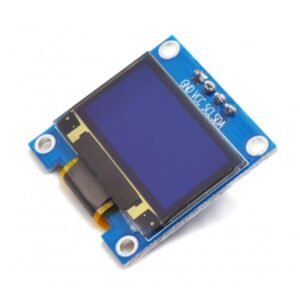
OLED Display Module 12864 0.96 Inch 4Pin
Original price was: ₨600.00.₨549.00Current price is: ₨549.00. Quick View- No need of the backlight
- The display is self-illuminating
- Power requirement is low
- They are offering the large viewing angle
- Full Compatible with Arduino
- Factory configured for SPI protocol (can easily change to IIC)
- Better performance characteristics than traditional LCD and LED displays.
- Only Need 2 I/O Port Control